


“Altcoins” once sounded like a footnote to Bitcoin’s story. Today, they are center stage—propelling blockchain from niche curiosity to a toolbox for everyday life and enterprise. From payment-focused tokens to smart contract platforms and privacy-centric coins.
Altcoins expand what blockchain can do, who can use it, and where it fits in the economy. They experiment rapidly, iterate on user experience, and pressure-test new features, all of which accelerate mainstream adoption.
Altcoins Expand Use Cases Beyond Store of Value
Bitcoin’s design brilliantly solves digital scarcity and censorship resistance, but it is not a Swiss Army knife. Altcoins extend blockchain’s utility into programmable money, application platforms, and data layers—each addressing real-world needs that broad audiences recognize as valuable.
From Payments to Platforms
Payment-oriented altcoins focus on speed, fees, and throughput. Their primary contribution is everyday utility: moving funds quickly and cheaply. Platform-focused altcoins, meanwhile, like smart contract networks, transform blockchains into computation layers where developers can build applications. This shift turns users from passive holders into active participants—lending, borrowing, trading, gaming, and collaborating without intermediaries.
The “Feature Laboratory” Effect
Altcoins operate as laboratories for features such as proof-of-stake, sharding, layer-2 scaling, and zero-knowledge proofs. By competing on performance and design, they push the entire industry forward. When an altcoin demonstrates a breakthrough—say, signing transactions with improved privacy or confirming blocks faster—users gravitate toward more responsive apps, and developers gain a wider palette to build with.
User Experience: The First Gate to Mass Adoption
Mainstream audiences adopt technology when it is simpler or better than alternatives. Altcoins have been relentless about UX, because without compelling experiences, their projects fade quickly.
Lower Fees and Faster Settlement
High fees and slow settlement are friction points that drive users away. Many altcoins prioritize throughput and fee predictability, enabling microtransactions, casual in-game purchases, and frequent on-chain interactions. Lower costs make blockchain viable for everyday activities, not just large transfers or speculation.
Wallets, Onramps, and Familiar UX
A crucial but often overlooked driver is the product experience surrounding the coin. Altcoin ecosystems sponsor non-custodial wallets with human-friendly features: social recovery, account abstraction, and integrations with fiat onramps. They refine onboarding flows that resemble familiar web and mobile apps. The smoother the journey—from buying a coin to using it in an app—the quicker users stick around.
Smart Contracts Make Blockchain “Do Things”
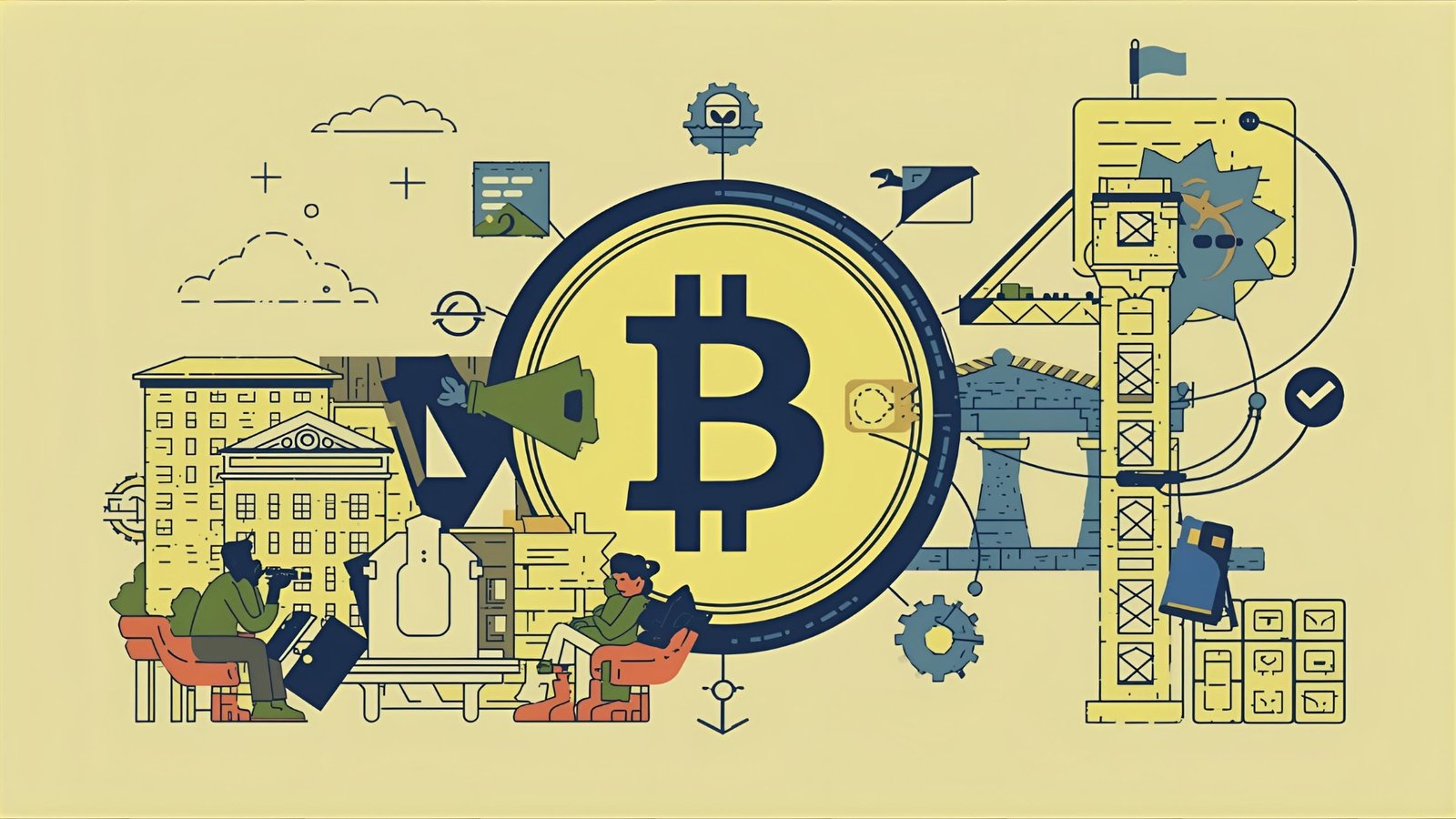
Smart contract platforms gave blockchain its “app store moment.” Altcoins in this category provide the programmable logic that turns money into tools, rules, and services.
DeFi: Financial Services Without the Middlemen
Bold terms like decentralized exchanges, automated market makers, flash loans, and yield aggregation illustrate how altcoins made finance composable. DeFi reimagines trading, lending, and liquidity as code-controlled primitives that anyone can access. The immediate benefit to adoption is utility: users who originally bought a coin “just to invest” suddenly have a reason to keep engaging—borrowing against assets, hedging, or providing liquidity to earn fees.
NFTs and Digital Ownership
Altcoin smart contract networks popularized NFTs as a proof of ownership for art, music, tickets, loyalty credentials, and in-game items. While the hype cycles come and go, the underlying utility remains: NFTs anchor digital provenance, royalty logic, and portable identity. This “ownership layer” resonates with creators, brands, and communities—groups with strong incentives to bring users on-chain.
Enterprise Tokenization
Altcoins also power tokenization of real-world assets—equities, bonds, invoices, real estate shares—helping institutions test more efficient settlement and fractional ownership models. This pragmatic bridge to traditional finance brings serious capital and regulatory attention, further normalizing blockchain in the mainstream economy.
Stablecoins: The Quiet Workhorse of Adoption
If there is a single altcoin category that made blockchain useful daily, it’s stablecoins. Pegged to fiat currencies, stablecoins reduce crypto’s notorious volatility, making prices predictable for shoppers, merchants, and payrolls.
Everyday Money on Open Rails
Stablecoins function like digital cash glued to global settlement rails. Freelancers get paid across borders in minutes. Merchants avoid card fees. Remittances arrive faster and cost less. Because the value stays stable, non-crypto natives are more willing to try blockchain for real transactions.
Liquidity and On-Chain Accounting
Stablecoins also grease the wheels of DeFi, allowing traders and protocols to denominate positions in dollars and simplify accounting. Their network effect is potent: once stablecoins take root in an ecosystem, other apps—lending, investing, payments—find it much easier to attract users who want dollar-like certainty with crypto-native speed.
Scalability and Performance: Making Room for the Masses
A technology cannot go mainstream if it buckles under load. Many altcoins exist to solve scale: throughput, latency, and cost.
Layer-1 Innovation
Some altcoins redesign consensus and data structures to increase capacity. Concepts such as proof-of-stake, BFT-style consensus, parallel execution, and data availability sampling attempt to squeeze more performance without sacrificing too much decentralization. For users, the experience is simply faster and cheaper transactions—exactly what mainstream apps require.
Layer-2 and Hybrid Designs
Other altcoin ecosystems embrace layer-2 scaling, moving heavy computation off-chain while committing results to a secure base layer. Rollups, validiums, and state channels reduce fees and congestion. Hybrid designs preserve security while granting consumer-grade speed—ideal for gaming, micropayments, and high-traffic social applications that would otherwise be cost-prohibitive.
Interoperability: Letting Chains Talk to Each Other

As altcoins multiplied, so did the need to connect them. Interoperability efforts ensure users and assets can move across networks, avoiding vendor lock-in and fragmentation.
Bridges, Standards, and Messaging Protocols
Cross-chain bridges and messaging protocols allow smart contracts on different chains to communicate. Token standards such as ERC-20 and ERC-721 inspired equivalents on other chains, enabling wallets and marketplaces to support assets more broadly. This connective tissue matters for adoption because users dislike being stuck. When altcoins interoperate, they form a larger, more useful network effect.
Multichain Applications
Developers increasingly deploy multichain apps that route users to the best environment for each task—low fees for microtransactions, higher security for settlement, specialized chains for gaming or identity. This flexibility lets products scale globally while tailoring performance to each use case, a hallmark of mature technology stacks.
Privacy and Compliance: Two Sides of the Trust Coin
Trust is essential for mainstream adoption. Altcoins address trust from two angles: protecting legitimate privacy and supporting compliance.
Privacy Enhancements for Everyday Users
Contrary to caricature, many privacy features serve ordinary needs: salary confidentiality, business negotiations, and consumer safety. Altcoins experiment with zero-knowledge proofs, confidential transactions, and selective disclosure. The goal is not opacity for its own sake, but user-centric privacy where individuals control what they reveal and to whom.
Compliance and On-Chain Transparency
On the other side, regulated institutions require auditability. Altcoin ecosystems are building compliance toolkits, enabling risk scoring, whitelisting, and travel-rule messaging while preserving user rights. Programmable compliance—where conditions are coded into smart contracts—lets organizations meet legal obligations without giving up the benefits of decentralization.
Governance: Users as Stakeholders, Not Just Customers
Mainstream tech often treats users as product. Many altcoins invert that relationship through token-based governance, allowing communities to influence protocol upgrades, treasury allocations, and ecosystem priorities.
Aligning Incentives with Tokens
When users and developers hold governance tokens, they care about the network’s long-term health. This alignment supports sustainable growth, funds public goods such as developer tooling and documentation, and encourages transparent decision-making. As a result, newcomers encounter ecosystems that feel owned by their communities, not controlled by a single corporation.
Public Goods and Education
Healthy altcoin communities invest in developer grants, hackathons, and education hubs that attract the next generation of builders. Better docs, tutorials, and SDKs lower friction for developers, which indirectly improves end-user experience. Governance-driven ecosystems can adapt quickly to user feedback, shipping features that make adoption more likely.
Read More: Cryptocurrency Trading for Beginners Guide to Start Trading Crypto
Industry Verticals: Where Altcoins Meet Real Problems
Blockchain becomes mainstream not in the abstract, but when it solves specific problems in recognizable industries. Altcoins tailor solutions that fit each sector’s constraints and workflows.
Payments, Remittances, and Payroll
In payments, stablecoins and low-fee altchains reduce settlement times and interchange costs. For remittances, they undercut traditional fees while delivering funds instantly. For payroll, companies pay a global workforce in minutes, with on-chain receipts providing transparent records.
Capital Markets and Tokenized Assets
In capital markets, altcoins enable asset tokenization, real-time settlement, and programmable compliance. Fractional ownership broadens access to previously illiquid assets like real estate or private equity, while on-chain registries reduce reconciliation overhead for back offices.
Supply Chain and Provenance
Altcoins power supply chain solutions that anchor certificates, track components, and verify provenance. By storing hashes and events on-chain, stakeholders can audit processes without exposing sensitive data. This improves consumer trust and regulatory reporting.
Media, Gaming, and Creator Economies
In media and gaming, altcoins enable micro-royalties, play-to-own models, and portable in-game items via NFTs. Creators monetize directly with fan tokens, while communities coordinate funding through DAOs. These models align incentives between platforms and participants, helping networks grow organically.
Education and Onboarding: Turning Curiosity into Competency
Curious users often stall at the first obstacle. Altcoin teams and communities lower the learning curve with documentation, sandbox environments, and social support.
Developer Tooling and SDKs
Robust SDKs, testnets, and example repositories reduce the time from idea to prototype. This matters because developers are the gateway to mainstream users: every well-built app becomes a billboard for blockchain’s practicality.
Community Support and Localized Resources
Altcoin communities excel at localized guides, translations, and region-specific tutorials. By making educational materials accessible in multiple languages and contexts, they invite participation from users who might otherwise be excluded, driving global adoption.
Security Maturity: From Experiments to Infrastructure
Security incidents once defined the narrative around crypto. While risks remain, altcoin ecosystems have matured with formal audits, bug bounty programs, and safer defaults.
Standards, Audits, and Insurance
Security standards and independent audits increase confidence for both retail users and institutions. Some ecosystems integrate protocol-level safeguards, circuit breakers, and insurance funds to mitigate tail risks. The result is a steadier base for mainstream applications that cannot afford catastrophic failure.
Social Recovery and Account Abstraction
Wallet innovations such as social recovery and account abstraction remove the single point of failure that seed phrases represent. Users can recover access through trusted contacts or devices, making self-custody less intimidating and more aligned with mainstream expectations.
Regulation: Constraint That Catalyzes Clarity
It may sound counterintuitive, but clearer rules often accelerate adoption. Altcoins operate across jurisdictions and actively engage with policymakers, helping shape standards around custody, disclosures, and consumer protection.
Compliance-Ready Architectures
By anticipating requirements—like KYC/AML, travel rules, and stablecoin reserve transparency—altcoin projects develop architectures that institutions can actually deploy. Banks, payment processors, and public companies need this clarity to participate at scale. The more compliant pathways exist, the more mainstream the technology becomes.
The Network Effect of Diversity
Altcoins don’t compete only with each other; they collectively compete with the status quo. Their diversity—of design, purpose, and community—creates a portfolio of experiments that discover what users truly want. Some projects will fade. Others will become invisible infrastructure powering billions of daily interactions. The common thread is progress: by exploring many directions at once, altcoins shorten the path to the solutions that make blockchain part of everyday life.
Measuring Adoption: Signals That Matter
Beyond price charts, meaningful adoption shows up in usage metrics and real-world integrations.
On-Chain Activity and Active Addresses
Sustained growth in transactions, unique addresses, and contract interactions suggests that users are doing things, not just trading. When altcoin networks show sticky activity—daily app usage, recurring payments, and steady developer commits—that is a signal of mainstream traction.
Integrations and Merchant Acceptance
Partnerships with payment providers, e-commerce platforms, and enterprise software spread blockchain’s reach. Merchant acceptance, payroll integrations, and cross-border partnerships transform altcoins from speculative assets into practical tools that non-crypto audiences can use without learning new jargon.
What Comes Next: Ambient Crypto
The endgame for mainstream adoption is “ambient crypto,” where users benefit from blockchain without noticing it. They scan a code and pay with a stablecoin behind the scenes. They trade an in-game item that happens to be an NFT. Their savings account earns yield via a compliant DeFi backend. In this future, altcoins function like the invisible protocols of the internet—standards and rails that quietly empower apps to do more, faster, and more fairly.
Conclusion
Altcoins drive mainstream blockchain adoption by making the technology usable, versatile, and relevant. They trim fees, speed up settlement, and package complex capabilities into approachable apps. They push the envelope with smart contracts, DeFi, NFTs, tokenization, interoperability, privacy, governance, and scaling solutions, turning abstract promises into concrete benefits for people and businesses.
Not every experiment will last, and risks remain, but the cumulative effect of altcoin innovation is undeniable: more reasons to use blockchain, fewer barriers to entry, and a steadily expanding circle of everyday users. As altcoins keep iterating, blockchain moves closer to ambient infrastructure—present, reliable, and woven into the fabric of digital life.
FAQs
Q: How do altcoins differ from Bitcoin in driving adoption?
Altcoins diversify blockchain’s utility beyond Bitcoin’s store-of-value role. Many emphasize smart contracts, low fees, and specialized features such as privacy, interoperability, or stablecoin stability. This variety enables more apps and real-world integrations, attracting users who need functionality rather than just a hedge against inflation.
Q: Why are stablecoins so important for mainstream users?
Stablecoins reduce volatility by tracking fiat currencies, making prices predictable for payments, remittances, and payroll. They integrate easily into DeFi and merchant systems, allowing users to transact with dollar-like certainty while retaining crypto’s speed and global reach.
Q: Can altcoins help businesses adopt blockchain without deep technical expertise?
Yes. Many altcoin ecosystems provide enterprise-ready tooling, APIs, and compliance features. With tokenization, programmable controls, and familiar accounting integrations, businesses can pilot blockchain projects—like faster settlements or loyalty tokens—without rebuilding their entire stack.
Q: Are privacy-focused altcoins at odds with regulation?
Not necessarily. Modern privacy tools emphasize selective disclosure and zero-knowledge techniques that allow verification without revealing full data. Combined with compliance toolkits, they help institutions meet legal requirements while preserving user-centric privacy, a balance crucial for mainstream trust.
Q: What should new users look for when choosing an altcoin ecosystem?
Prioritize practical factors: transaction fees, network uptime, app quality, wallet UX, security track record, and community support. Look for transparent documentation, audits, and a vibrant developer scene. Ecosystems that excel in these areas typically offer the most reliable path to everyday, non-speculative use.
