

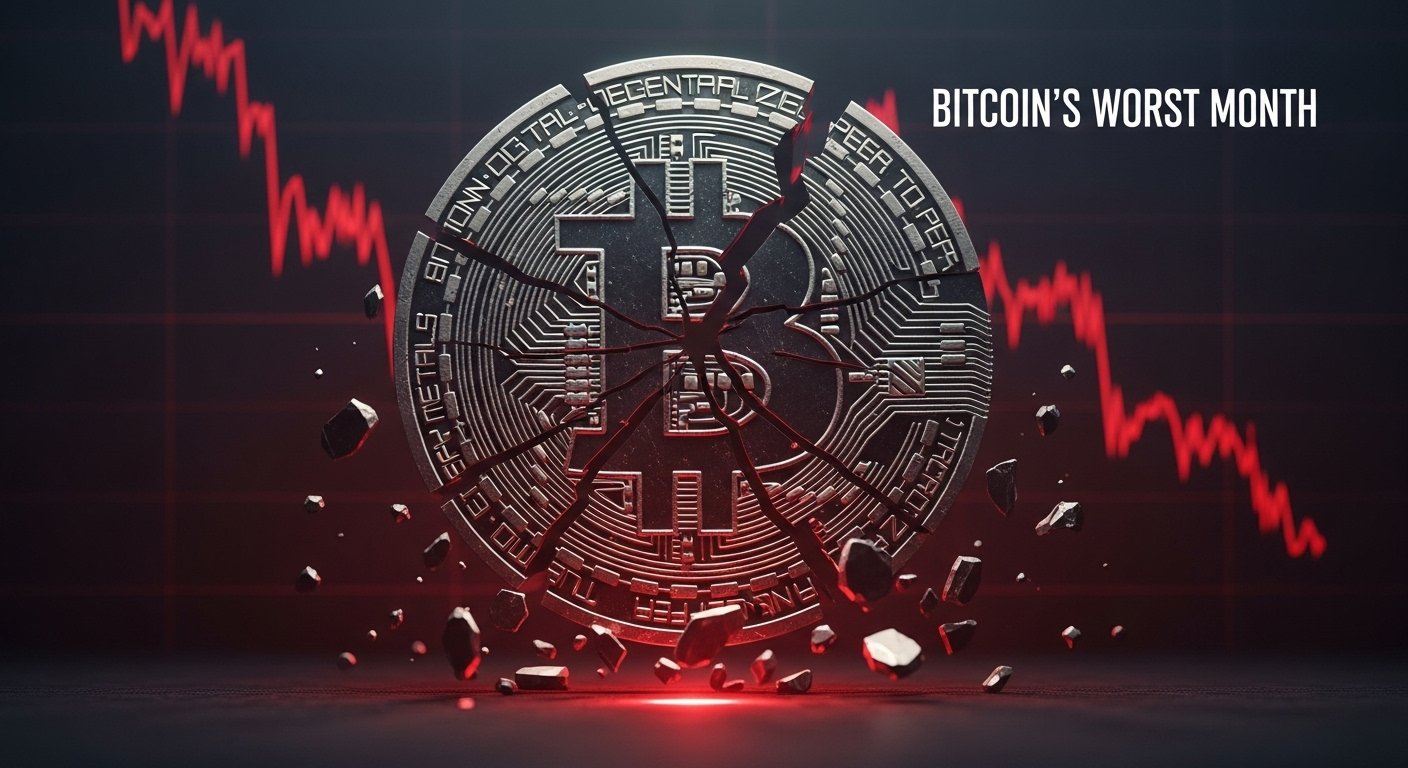
Bitcoin heading for worst month since crypto collapse of 2022 is no longer a speculative phrase but a statement supported by the harsh reality unfolding across global cryptocurrency markets. The final weeks of 2025 have been marked by a dramatic downturn that has left investors stunned, analysts re-evaluating their forecasts, and traders wondering whether this is a temporary correction or the early stages of a deeper market shift. The drop has been steep, swift, and emotionally charged because the current decline resembles the darkest moments of the 2022 crypto implosions, when massive companies such as Terra and FTX collapsed and sparked a devastating chain reaction.
The difference in 2025 is that the triggers are less about fraud and systemic failure and more about economic pressure, shifting macro conditions, and an overheated market cooling after an overly enthusiastic rally. Still, the severity of the downturn has been enough to send shockwaves through the digital asset ecosystem. Bitcoin has lost close to a quarter of its value in a single month, marking its sharpest monthly decline since the catastrophic events of mid and late 2022. For a market that recently celebrated new all-time highs, this reversal has felt abrupt and unsettling, stirring memories of periods that many hoped had been left in the past.
Why Bitcoin Is Having Its Worst Month Since 2022
Bitcoin’s decline is significant not only because it marks a large percentage drop but also because of how quickly market sentiment turned. Only weeks ago, the cryptocurrency was pushing above the $120,000 level for the first time in history. Investors were confident, institutions were increasing their exposure, and Bitcoin ETFs were experiencing some of the largest cumulative inflows since their introduction. The energy surrounding the digital asset market was optimistic and forward-looking.
The shift began when profit-taking from major holders coincided with a cooling macro environment. As the price started to weaken, leveraged positions became vulnerable. Cryptocurrency markets are notoriously sensitive to leverage, and this time was no different. Overextended traders faced cascading liquidations that triggered steeper losses. As the price fell, investor confidence softened, and a cycle of fear began to set in. The momentum that had previously pushed Bitcoin higher began working against it, magnifying the drop.
The sudden change in sentiment has been reminiscent of the early summer of 2022, when the Terra collapse sent markets reeling. The difference is that in 20,25, there has been no major structural failure of a stablecoin or exchange. Instead, the decline has stemmed from a combination of macro uncertainty, overheated expectations, and an excess of speculative leverage in the system.
The Shadow of the 2022 Crypto Collapse

The reason the phrase Bitcoin heading for worst month since crypto collapse of 2022 resonates so strongly is because the 2022 crisis remains one of the most painful chapters in cryptocurrency history. The collapse of TerraUSD created a domino effect that toppled hedge funds, lenders, borrowers, and eventually one of the world’s largest exchanges. As liquidity evaporated and the industry took blow after blow, Bitcoin fell all the way into the mid-$15,000 range.
When people hear comparisons to 2022, anxiety rises quickly. The memories of frozen withdrawals, bankruptcy filings, and sudden insolvencies are fresh for many traders. However, 2025’s downturn differs significantly in nature. Today’s market structure is stronger. There are more reputable custodians, greater regulatory oversight in major regions, and more institutions with diversified crypto exposure rather than reckless concentration. While the pain of a large monthly decline cannot be ignored, the structural foundation beneath the crypto ecosystem today is far more stable than it was during the chaos of 2022.
Still, the psychological scars of that period mean that a major monthly decline carries more emotional weight than it might otherwise. Investors react faster, worry sooner, and draw parallels more readily. This psychological factor has played a significant role in intensifying the reaction to the recent downturn.
The Key Drivers Behind Bitcoin’s Severe November Decline
The Unwinding of Leverage and Overheated Momentum
Bitcoin’s rise to all-time highs in 2025 was in part fueled by high leverage across major derivatives exchanges. Traders piled into futures positions expecting continuous upward momentum, causing funding rates to surge. The problem with markets that climb too quickly is that they become vulnerable to any shift in sentiment. When the first wave of profit-taking arrived, it was enough to expose the fragility of the leveraged trading environment. Long positions were liquidated, stop-loss orders were triggered, and as the price fell further, additional margin calls accelerated the downturn.
The system began unwinding not because of fraud or mismanagement, but because of excessive optimism. The volatility that followed reflected the cascade of liquidations that have historically been a hallmark of Bitcoin corrections during major bull cycles.
ETF Outflows and Cooling Institutional Demand
The introduction of Bitcoin ETFs played a transformative role in the cryptocurrency’s rise earlier in the cycle. For the first time, institutions could easily gain exposure without needing to directly custody digital assets. This increased mainstream adoption dramatically. However, the same mechanism that contributed to Bitcoin’s rise also played a role in its decline. As the broader market began to show signs of strain, ETF flows shifted from inflows to outflows. Large investors began reducing exposure, creating steady and sustained selling pressure.
ETF outflows do not create panic in the same way exchange collapses do, but they have a significant mechanical impact. They steadily drain demand and can reinforce downward momentum, especially when the market is already fragile. This shift has contributed directly to Bitcoin’s worst month since the crypto collapse of 2022.
Macro Headwinds and a Shift to Risk Aversion
Global macroeconomic conditions have been less supportive in recent months. What once appeared to be a clear path toward monetary easing has become uncertain. Several central banks have signaled caution, suggesting that interest rates may stay elevated longer than previously anticipated. Higher rates typically encourage investors to favor lower-risk assets. At the same time, renewed trade tensions and geopolitical anxieties have increased volatility across multiple asset classes.
Bitcoin, despite being praised as a decentralized and deflationary store of value, still behaves like a high-beta risk asset in the short term. When global markets become risk-averse, capital often exits speculative sectors first, and Bitcoin tends to be one of the earliest casualties.
How 2025’s Decline Compares to Previous Crypto Market Downturns

Bitcoin’s current decline has brought comparisons not only to the 2022 crash but also to earlier cycles such as the 2018 bear market. Each downturn has its own characteristics, shaped by different catalysts, participants, and levels of market maturity. 2018, the market was driven primarily by retail mania and a massive unwinding of ICO speculation. In 2022, the collapse of large corporations and unstable stablecoins created systemic panic.
In 2025, the market environment is more sophisticated. Institutions play a larger role, regulation is improving, and blockchain use cases are deeper and more integrated into financial ecosystems. The decline today is driven primarily by macroeconomic pressures and the unwinding of speculative excess, not by existential failures within the crypto system. This suggests that while the pain is real, the foundation is sturdier than in previous cycles.
This distinction is important for investors, because it indicates that the current downturn may not result in a prolonged multi-year winter like the one that followed the 2022 collapse. Instead, it could represent a severe but temporary correction within a larger and still-developing long-term uptrend.
The Impact on Crypto Investors and Market Psychology
The psychological landscape of the crypto market has shifted significantly over the past month. Short-term holders, particularly those who bought near the top, are facing losses that can trigger panic selling. The speed of Bitcoin’s rise attracted many new traders who had not experienced significant volatility before, and their reaction to the current decline has intensified downward pressure.
Long-term investors, however, often approach downturns differently. Many of them view sharp corrections as natural components of Bitcoin’s market cycles. Historically, long-term holders have accumulated during periods of intense fear, particularly when the market narrative focuses on phrases such as Bitcoin heading for its worst month since the crypto collapse of 2022. Their conviction helps stabilize the market by providing a foundation of demand that is not reliant on short-term price action.
The divergence between short-term fear and long-term conviction is shaping the current environment. While panic is present at the edges of the market, the core of Bitcoin’s investor base remains relatively calm, which could help the market recover more quickly than in past downturns.
The Ripple Effect Across Altcoins and DeFi
Bitcoin’s decline has not occurred in isolation. The broader cryptocurrency market has been affected significantly, with altcoins typically experiencing steeper percentage drops. Historically, altcoins outperform Bitcoin during bull markets and underperform during downturns. This pattern has continued in the current decline. Many smaller tokens and DeFi assets have seen losses far exceeding Bitcoin’s 25 percent drop. Liquidity has decreased, on-chain activity has softened, and trading volumes across decentralized exchanges have shrunk.
The downturn in altcoin markets underscores Bitcoin’s dominant position. When the leading digital asset experiences its worst month since the 2022 crypto collapse, the rest of the market follows. This correlation demonstrates the dependency of the broader ecosystem on Bitcoin’s performance and sentiment.
See More: Bitcoin Price Hits $250,000. Be Ready Before 2025 Ends
Will Bitcoin Recover? Historical Context and Forward Outlook
Bitcoin’s history is filled with periods of dramatic decline followed by strong recoveries. Every major downturn has eventually been followed by consolidation and renewed growth once macro pressures eased. The question now is whether the current downturn will follow this pattern or whether it signals the start of a deeper bear phase.
Historically, Bitcoin has delivered some of its largest gains after its most painful declines. The month following a severe drop often marks the beginning of a period of stabilization. Seasonality data also shows that Bitcoin’s performance tends to improve in months following major sell-offs. Although past results cannot guarantee future outcomes, they provide important context and indicate that the current decline does not automatically imply a long-term trend reversal.
Much depends on macroeconomic conditions, particularly interest rate expectations and geopolitical stability. If global markets stabilize and risk sentiment improves, Bitcoin could begin to recover more quickly than expected. Conversely, if uncertainty continues, the recovery may be slower and more fragile.
Risk Management Lessons from Bitcoin’s Latest Crash
The recent decline offers important lessons for both new and experienced investors. Bitcoin’s volatility is inherent to its nature, and participating in the market requires a level of psychological resilience and practical strategy. Those who approach Bitcoin without consideration for risk tolerance, time horizon, and capital allocation are often the ones who suffer most during large declines.
The importance of avoiding excessive leverage cannot be overstated. Many traders who were heavily leveraged have been liquidated during the downturn, losing far more than they intended. The market’s structure ensures that periods of extreme optimism often precede periods of equally extreme pain. This is why understanding position sizing, having a clear investment thesis, and maintaining discipline are essential.
Investors who adopt strategies such as dollar-cost averaging, maintaining diversified portfolios, and separating long-term investment from short-term trading tend to weather downturns more effectively. Emotional reactions driven by headlines can be costly. The phrase Bitcoin heading for worst month since crypto collapse of 2022 may be alarming, but it should serve as a signal to re-evaluate strategy rather than panic.
Conclusion
Bitcoin’s worst month since the 2022 crypto collapse is a dramatic development, but it does not mark the end of the cryptocurrency era. Instead, it serves as a reminder that volatility is a core component of Bitcoin’s identity and that dramatic price swings remain part of its long-term evolution. The current downturn reflects a combination of macroeconomic challenges, speculative excess, and shifting market psychology rather than fundamental flaws in the underlying technology or ecosystem.
Whether this moment becomes a turning point or a temporary setback will depend on a variety of factors, including global economic trends, regulatory developments, and investor behavior. What remains clear is that Bitcoin continues to mature, and its ability to withstand severe declines without structural collapse demonstrates a resilience that was far less evident in 2022.
For investors, the important question is not whether Bitcoin has declined. But what this decline reveals about their strategy, risk tolerance, and long-term perspective. The market will eventually move on from this downturn. The only question is how prepared participants are to move with it.
