

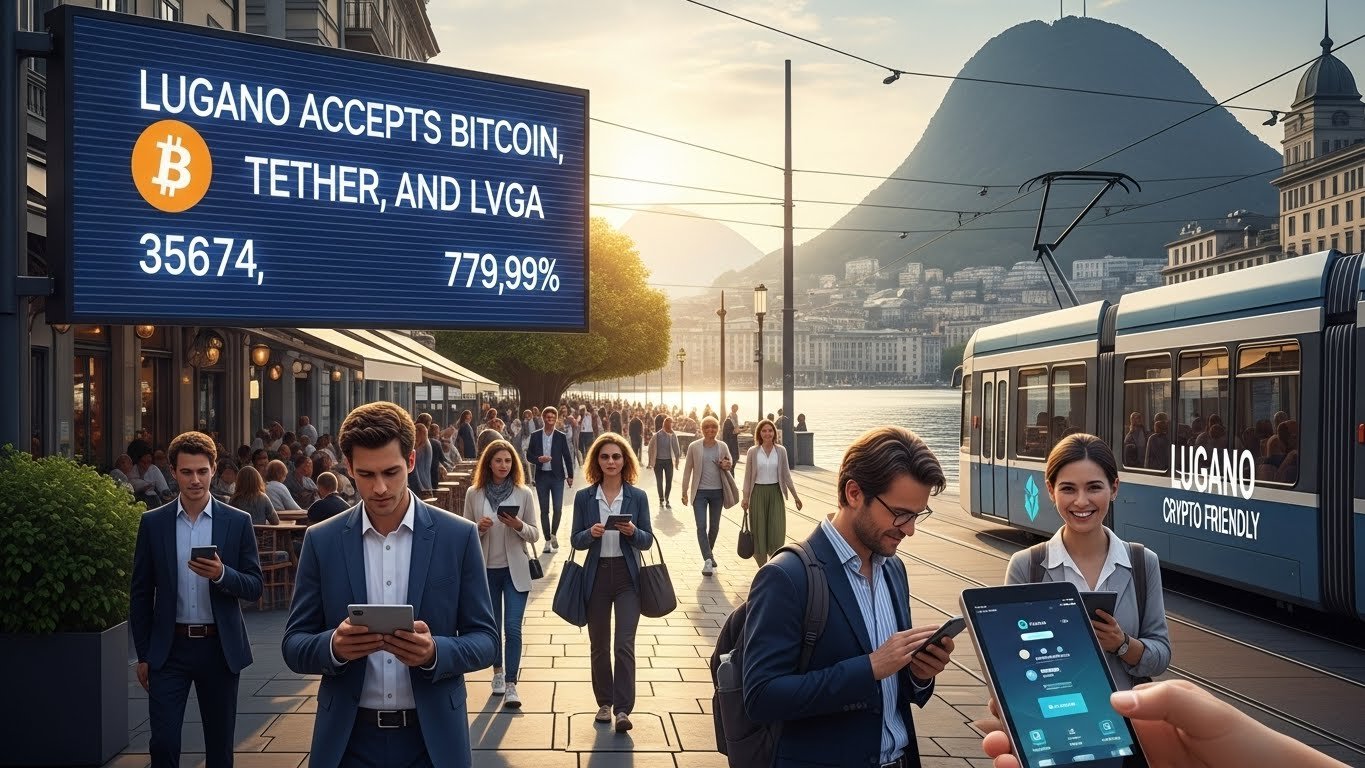
In the heart of Switzerland’s Italian-speaking region lies a groundbreaking financial experiment that’s capturing global attention. Lugano has emerged as the pioneering Swiss city that accepts bitcoin for everyday transactions, from municipal taxes to morning coffee. This remarkable transformation represents more than just technological adoption; it’s a bold statement about the future of money in one of the world’s most financially sophisticated nations.
While many cities worldwide discuss blockchain technology and cryptocurrency integration, Lugano has moved beyond conversation to implementation. The city’s administration, in partnership with Tether Operations Limited, launched the “Plan ₿” initiative in March 2022, fundamentally changing how residents and businesses interact with digital currencies. Today, this Swiss city accepts bitcoin alongside traditional payment methods, creating a hybrid financial ecosystem that bridges conventional banking with cryptocurrency innovation.
The decision to become a bitcoin-accepting Swiss city wasn’t made lightly. Switzerland has long maintained its reputation as a global financial hub, and Lugano’s embrace of cryptocurrency reflects the nation’s forward-thinking approach to financial technology while maintaining its characteristic regulatory prudence.
Lugano’s Bitcoin Revolution
What Makes This Swiss City Accept Bitcoin?
Lugano’s journey toward becoming a cryptocurrency-friendly destination began with recognizing the evolving nature of money and commerce. The city’s Mayor, Michele Foletti, alongside the municipal council, understood that financial innovation could position Lugano as a leader in the digital economy. The Swiss city accepts bitcoin initiative wasn’t merely about technology adoption but about creating economic opportunities and attracting blockchain companies and talent.
The Plan ₿ initiative established a comprehensive framework allowing residents to use Bitcoin, Tether’s USDT stablecoin, and the city’s own LVGA Points token for various transactions. This multi-cryptocurrency approach demonstrates the city’s commitment to providing flexibility while managing volatility concerns inherent in digital currencies.
What sets Lugano apart from other cryptocurrency-friendly locations is the official governmental support. When a Swiss city accepts bitcoin with municipal backing, it provides legitimacy and infrastructure that grassroots adoption cannot achieve. The city government committed over three million Swiss francs to support the initiative, covering transaction fees and building the necessary technological infrastructure.
How Bitcoin Payments Work in Lugano
The practical implementation of cryptocurrency payments in this Swiss city that accepts bitcoin involves sophisticated yet user-friendly systems. Merchants and service providers receive payments through approved platforms that handle the complexity of blockchain transactions while providing simple interfaces comparable to traditional payment terminals.
Residents can pay municipal taxes, public transportation fees, parking tickets, and tuition for public services using cryptocurrency. The city partnered with various payment processors to ensure smooth transactions, with real-time conversion options for businesses preferring to receive Swiss francs rather than holding cryptocurrency.
The infrastructure supporting this bitcoin-accepting Swiss city includes dedicated point-of-sale systems, mobile payment applications, and online payment gateways. These systems automatically handle currency conversion, transaction verification, and accounting requirements, making cryptocurrency payments as straightforward as using credit cards or mobile payment apps.
The Scope of Bitcoin Adoption in Switzerland’s Crypto Capital
Where You Can Spend Bitcoin in Lugano
The practical applications of cryptocurrency in this Swiss city that accepts bitcoin extend across virtually every sector of daily life. Restaurants and cafes throughout the city center display cryptocurrency payment symbols alongside Visa and Mastercard logos. From traditional Italian trattorias to modern fusion restaurants, dining establishments have embraced digital currency payments.
Retail shops ranging from fashion boutiques to electronics stores participate in the program. Grocery stores and supermarkets allow residents to purchase daily necessities using Bitcoin or USDT, demonstrating that cryptocurrency has moved beyond luxury purchases into everyday essentials. The city’s tourism sector, including hotels, tour operators, and cultural attractions, actively promotes cryptocurrency payment options to attract tech-savvy international visitors.
Professional services have also joined this Swiss city’s bitcoin ecosystem. Legal firms, accounting practices, medical clinics, and consulting agencies accept cryptocurrency payments, demonstrating the breadth of adoption across service industries. Real estate transactions increasingly involve cryptocurrency, with some property developers specifically marketing to international buyers seeking to utilize digital assets.
Government Services Embracing Cryptocurrency
Perhaps most remarkably, this Swiss city accepts bitcoin for official governmental services, a feature rarely seen globally. Residents can pay property taxes using cryptocurrency, though the city converts these payments to Swiss francs to manage its budget in traditional currency. This approach provides convenience for citizens while maintaining fiscal responsibility for municipal finances.
Parking fees throughout Lugano can be paid via cryptocurrency-enabled mobile applications, eliminating the need for coins or parking cards. Public transportation passes, including bus tickets and regional travel cards, are purchasable with digital currencies. The city’s administrative fees, including permits, licenses, and documentation charges, accept cryptocurrency payments through dedicated municipal portals.
Educational institutions within this bitcoin-friendly Swiss city accept tuition payments in cryptocurrency for public schools and universities. Cultural institutions, including museums and theaters operated by the municipality, have integrated cryptocurrency payment systems, making Lugano’s cultural life accessible to those preferring digital currencies.
The Economic Impact of Switzerland’s Bitcoin City
Attracting Blockchain Companies and Talent
Lugano’s decision to become a Swiss city that accepts bitcoin has created significant economic ripple effects. The city has attracted numerous blockchain and cryptocurrency companies seeking favorable regulatory environments and supportive communities. These companies bring high-skilled employment opportunities, contributing to the local economy and tax base.
The Swiss Crypto Valley, traditionally centered around Zug, has expanded its influence to include Lugano as a southern hub. This bitcoin-accepting Swiss city offers advantages beyond regulatory friendliness, including quality of life, Mediterranean climate, and proximity to Italy while maintaining Swiss infrastructure and governance standards.
Venture capital flowing into the region has increased substantially since the cryptocurrency initiative launched. Blockchain startups choosing Lugano as their European headquarters cite the supportive ecosystem, access to talent, and the practical testing ground that a Swiss city accepts bitcoin provides for new technologies and applications.
Tourism and International Attention
The cryptocurrency initiative has positioned this Swiss city that accepts bitcoin as a destination for digital currency enthusiasts worldwide. Cryptocurrency conferences, blockchain summits, and fintech events now regularly occur in Lugano, bringing international visitors and media attention. These events generate significant economic activity through hotel bookings, restaurant spending, and local commerce.
Tourism marketing emphasizes the unique aspect of being a bitcoin-friendly Swiss city, attracting a demographic of affluent, tech-savvy travelers. The city has developed specialized tours highlighting cryptocurrency adoption, visiting participating merchants, and explaining the blockchain infrastructure supporting the initiative. This niche tourism creates differentiation in Switzerland’s competitive tourism market.
International media coverage of Lugano’s cryptocurrency experiment has provided invaluable marketing exposure. News organizations from financial centers like London, New York, Singapore, and Hong Kong have featured stories about this Swiss city that accepts bitcoin, generating awareness that traditional tourism marketing could never achieve at comparable cost.
Switzerland’s Regulatory Framework Supporting Bitcoin
Why Switzerland Embraces Cryptocurrency
Understanding why a Swiss city accepts bitcoin requires examining Switzerland’s broader regulatory philosophy toward cryptocurrency. The nation has developed comprehensive yet innovation-friendly regulations governing digital assets, providing legal clarity that many jurisdictions lack. The Swiss Financial Market Supervisory Authority (FINMA) established clear guidelines for cryptocurrency businesses, token classifications, and consumer protections.
Switzerland’s approach recognizes different categories of tokens, including payment tokens, utility tokens, and asset tokens, each subject to appropriate regulatory frameworks. This nuanced understanding allows innovation while protecting consumers and maintaining financial system integrity. When a Swiss city like Lugano accepts bitcoin, it operates within this well-established regulatory framework rather than creating ad-hoc rules.
The country’s banking secrecy traditions, though significantly modified in recent decades, created a culture valuing financial privacy and innovation. This philosophical foundation made Switzerland naturally receptive to cryptocurrency’s potential, leading to national policies supporting blockchain technology development and cryptocurrency adoption across multiple Swiss cities accepting bitcoin and other digital assets.
Legal Status of Bitcoin in Switzerland
Bitcoin and other cryptocurrencies enjoy legal recognition in Switzerland as means of payment, though not legal tender in the traditional sense. This distinction matters because while a Swiss city accepts bitcoin for various transactions, businesses aren’t legally obligated to accept cryptocurrency as they are with Swiss francs. However, the voluntary acceptance framework has proven effective, with widespread adoption occurring through market forces rather than legal mandates.
Taxation of cryptocurrency transactions follows established principles. Capital gains from cryptocurrency holdings by individuals are generally tax-free under Swiss law, though professional trading activities face taxation. This favorable tax treatment contributes to Switzerland’s attractiveness for cryptocurrency investors and businesses. When residents in this bitcoin-accepting Swiss city make purchases using cryptocurrency, transactions are treated similarly to foreign currency exchanges for tax purposes.
Anti-money laundering regulations apply to cryptocurrency exchanges and service providers, ensuring that the Swiss city’s bitcoin ecosystem maintains integrity and prevents illicit activities. These regulations require customer identification, transaction monitoring, and suspicious activity reporting, balancing innovation with security concerns that legitimate cryptocurrency adoption requires.
Comparing Lugano to Other Cryptocurrency Cities
How This Swiss City Compares to Zug
While Lugano has gained attention as a Swiss city that accepts bitcoin, it joins Zug in pioneering cryptocurrency adoption within Switzerland. Zug, often called “Crypto Valley,” began accepting Bitcoin for small municipal payments as early as 2016 and has concentrated blockchain companies in its region. However, Lugano’s approach differs in scale and scope.
Zug’s cryptocurrency ecosystem primarily focused on attracting businesses and creating favorable conditions for blockchain companies. This northern Swiss city became headquarters for major cryptocurrency projects, foundations, and startups. Lugano, conversely, emphasizes practical everyday use, making it a Swiss city that accepts bitcoin for comprehensive daily transactions rather than primarily business-focused adoption.
The southern location gives Lugano distinct advantages, including proximity to Italy and a Mediterranean climate contrasting with Zug’s more northern character. Both Swiss cities accepting bitcoin demonstrate that cryptocurrency adoption can succeed in different contexts, with Zug representing the corporate blockchain hub and Lugano showcasing practical consumer adoption.
International Cryptocurrency Cities
Comparing this Swiss city that accepts bitcoin with international counterparts reveals Lugano’s unique position. El Salvador declared Bitcoin legal tender nationwide in 2021, creating mandatory acceptance across the country. However, implementation challenges, infrastructure limitations, and political controversies have complicated El Salvador’s experiment, contrasting with Lugano’s voluntary, well-supported approach.
Miami has positioned itself as cryptocurrency-friendly through political leadership and attracting blockchain conferences and companies. However, actual merchant adoption remains limited compared to this Swiss city accepting bitcoin for everyday transactions. Miami’s cryptocurrency identity relates more to corporate presence and political messaging than comprehensive payment infrastructure.
Bitcoin Beach in El Zonte, El Salvador, created a grassroots cryptocurrency economy before the national Bitcoin law, similar in spirit to Lugano’s practical adoption focus. However, the Swiss city that accepts bitcoin benefits from superior infrastructure, regulatory clarity, and economic stability that developing nations struggle to provide, making Lugano’s model more sustainable and replicable for other developed economies.
Challenges and Criticisms of the Bitcoin City Model
Volatility and Price Risk Concerns
Despite the innovation of a Swiss city that accepts bitcoin, critics raise legitimate concerns about cryptocurrency’s price volatility. Bitcoin’s value can fluctuate dramatically within hours, creating uncertainty for both consumers and merchants. While payment processors can immediately convert cryptocurrency to Swiss francs, the conversion mechanisms add costs and complexity that traditional payment methods avoid.
Merchants in this bitcoin-friendly Swiss city must decide whether to hold cryptocurrency received as payment or immediately convert to fiat currency. Holding cryptocurrency exposes businesses to potential losses if values decline, while immediate conversion negates potential gains from price appreciation. This decision-making complexity represents a genuine challenge that traditional payment methods don’t present.
The city government addresses volatility concerns by converting cryptocurrency tax payments to Swiss francs immediately, maintaining budgetary stability. However, this pragmatic approach raises questions about whether a Swiss city truly accepts bitcoin if the municipality immediately exchanges it for traditional currency. Proponents argue the infrastructure and acceptance matter more than holding strategy, while critics suggest true adoption requires willingness to hold cryptocurrency.
Energy Consumption and Environmental Questions
Environmental advocates criticize Bitcoin’s significant energy consumption, questioning whether a Swiss city should accept bitcoin given climate concerns. Bitcoin mining’s electricity usage, comparable to some small nations’ total consumption, conflicts with Switzerland’s environmental commitments and carbon reduction goals. This tension between technological innovation and environmental responsibility presents an ongoing debate.
Lugano addresses these concerns by emphasizing that cryptocurrency use for transactions doesn’t require mining activity, which occurs globally regardless of whether this Swiss city accepts bitcoin for payments. The city also promotes USDT stablecoin and LVGA Points alongside Bitcoin, offering alternatives with different environmental footprints. However, critics argue that facilitating Bitcoin use indirectly supports the mining ecosystem.
The debate reflects broader discussions about cryptocurrency’s environmental impact and whether technological benefits justify energy costs. As this bitcoin-accepting Swiss city continues its experiment, monitoring environmental impacts and exploring sustainable alternatives will remain important for maintaining public support and meeting national climate objectives.
The Future of Bitcoin Adoption in Swiss Cities
Expansion Plans and Growing Infrastructure
The success of Lugano as a Swiss city that accepts bitcoin has inspired discussions about expanding the model to other Swiss municipalities. The infrastructure, lessons learned, and demonstrated feasibility make replication more achievable for other cities considering cryptocurrency adoption. Regional economic partnerships could create networks of Swiss cities accepting bitcoin, enhancing utility through expanded merchant participation.
Technological improvements continue enhancing the cryptocurrency payment experience in Lugano. Lightning Network implementation enables faster, cheaper Bitcoin transactions, addressing scalability concerns that limited earlier adoption. Smart contract platforms offer possibilities for more sophisticated financial instruments and automated municipal services. As technology evolves, this Swiss city’s bitcoin ecosystem will likely incorporate innovations that weren’t available during initial implementation.
The city plans to expand cryptocurrency acceptance to additional services and municipal functions. Future developments might include cryptocurrency-based bonds for municipal financing, blockchain-based voting systems, and tokenized access to public services. These innovations would deepen the integration of cryptocurrency beyond simple payment acceptance, potentially making Lugano a comprehensive blockchain-enabled Swiss city rather than simply a place where transactions accept bitcoin.
Potential Challenges Ahead
Despite progress, the Swiss city that accepts bitcoin faces ongoing challenges requiring attention. Regulatory changes at national or international levels could impact the favorable environment enabling cryptocurrency adoption. European Union regulations affecting Switzerland through bilateral agreements might impose new requirements or restrictions on cryptocurrency activities.
User adoption remains uneven, with some demographic groups embracing cryptocurrency while others prefer traditional payment methods. Ensuring inclusive access and preventing a digital divide requires ongoing education, support services, and maintaining alternative payment options. A truly successful bitcoin-accepting Swiss city must serve all residents, not only technology enthusiasts.
Competition from central bank digital currencies (CBDCs) could affect independent cryptocurrency adoption. If Switzerland introduces a digital Swiss franc, the relative advantage of accepting Bitcoin and private cryptocurrencies might diminish. The city must continually articulate the unique value proposition that decentralized cryptocurrencies offer compared to government-issued digital currencies to maintain momentum as a Swiss city that accepts bitcoin.
Practical Guide for Visitors and Residents
How to Use Bitcoin in Lugano
Visitors and new residents wondering how to utilize cryptocurrency in this Swiss city that accepts bitcoin will find the process straightforward. Most smartphones can install cryptocurrency wallet applications supporting Bitcoin, USDT, and LVGA Points. Popular options include hardware wallets for security-conscious users and mobile wallets for convenient everyday transactions.
Upon arrival in this bitcoin-friendly Swiss city, obtaining local cryptocurrency information through tourism offices, hotel concierges, or dedicated information centers helps visitors navigate the system. Many establishments display cryptocurrency acceptance through window stickers, payment terminal symbols, or mobile app listings identifying participating merchants.
Making payments involves scanning QR codes displayed by merchants, entering payment amounts in the wallet application, and confirming transactions. The process typically completes within seconds for stablecoin payments and minutes for Bitcoin transactions on the main blockchain. Lightning Network enables instant Bitcoin payments, matching traditional payment card speed while benefiting from cryptocurrency’s attributes.
Getting Started with Cryptocurrency
Newcomers to cryptocurrency might feel overwhelmed despite living in a Swiss city that accepts bitcoin, but numerous resources support learning and adoption. The city sponsors educational workshops explaining cryptocurrency basics, security practices, and practical usage for daily transactions. These sessions often occur in multiple languages, reflecting Lugano’s international character.
Cryptocurrency exchanges with physical presence in Lugano allow face-to-face account setup, identification verification, and purchase of initial cryptocurrency holdings using Swiss francs or bank transfers. This local presence provides reassurance for those uncomfortable with purely online financial services. Staff assistance helps navigate the technical aspects that might intimidate newcomers.
Security represents a crucial concern for anyone using cryptocurrency in this bitcoin-accepting Swiss city. Best practices include using reputable wallet applications, enabling two-factor authentication, maintaining secure backups of wallet recovery phrases, and never sharing private keys. The city’s information resources emphasize that cryptocurrency places responsibility on individuals for security, contrasting with traditional banking’s institutional protections.
Conclusion
Lugano’s transformation into a Swiss city that accepts bitcoin represents one of the most ambitious real-world cryptocurrency adoption experiments globally. By enabling residents and visitors to use Bitcoin, USDT, and local tokens for everything from taxes to coffee, Lugano demonstrates that cryptocurrency can function as practical money rather than merely speculative assets. The city’s approach combines technological innovation with Switzerland’s characteristic financial sophistication and regulatory prudence.
The success of this bitcoin-friendly Swiss city provides valuable lessons for other municipalities considering cryptocurrency adoption. Infrastructure investment, regulatory clarity, merchant education, and user support all prove essential for moving beyond pilot programs to comprehensive implementation. Lugano shows that becoming a Swiss city that accepts bitcoin requires commitment from government, businesses, and citizens working together toward shared goals.
As the cryptocurrency landscape evolves, Lugano’s position as a pioneering Swiss city accepting bitcoin will likely grow in significance. Whether other cities replicate the model or Lugano remains unique, the experiment provides invaluable data about cryptocurrency’s potential role in future financial systems.
Are you ready to experience the future of money? Visit Lugano and discover firsthand how this innovative Swiss city that accepts bitcoin is reshaping our understanding of currency, commerce, and community. Whether you’re a cryptocurrency enthusiast, financial professional, or curious traveler, Lugano offers a glimpse into a possible financial future where digital and traditional currencies coexist seamlessly.
See more;Enterprise Blockchain in 2025 What’s Really Driving Adoption
