

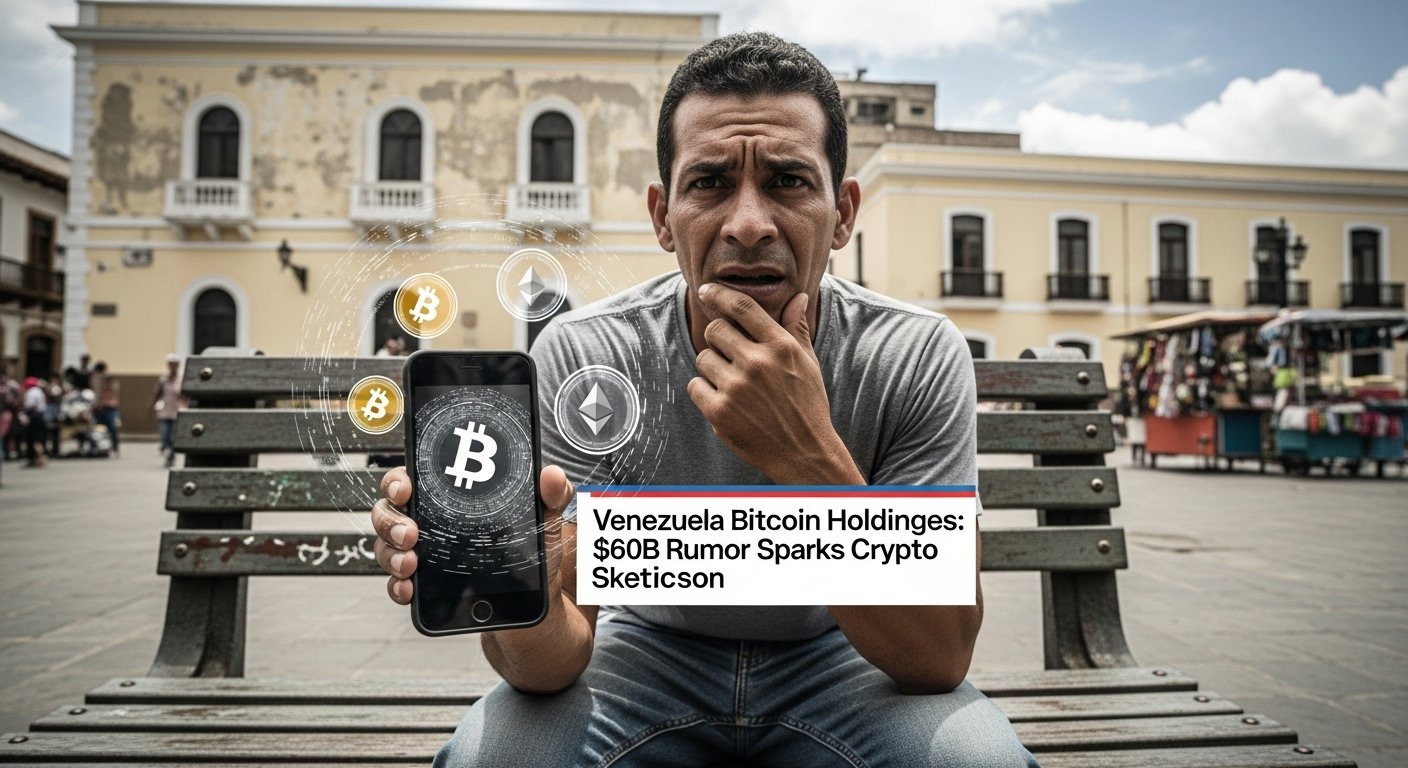
Venezuela’s Bitcoin holdings could amount to a staggering $60 billion, making the South American nation potentially one of the largest institutional holders of the world’s premier digital asset. These sensational rumors have sparked intense debate across financial markets and crypto communities worldwide, yet industry experts remain deeply skeptical about the authenticity of such claims. As the digital currency landscape continues to evolve, understanding the truth behind these assertions has become crucial for investors, policymakers, and cryptocurrency enthusiasts who closely monitor how nations interact with blockchain technology and decentralized finance.
The speculation surrounding Venezuela’s Bitcoin holdings raises fundamental questions about government cryptocurrency strategies, blockchain transparency, and the verifiable nature of digital asset ownership. With Venezuela’s economy having faced severe challenges over the past decade, including hyperinflation and international sanctions, the notion that the country could have quietly accumulated such massive Bitcoin reserves seems both intriguing and implausible to many analysts.
The Origin of Venezuela’s $60 Billion Bitcoin Rumors
The whispers about substantial Venezuelan cryptocurrency reserves didn’t emerge from official government channels or verified blockchain data. Instead, these claims have circulated through social media platforms, cryptocurrency forums, and unverified reports that lack concrete evidence or transparent documentation. The rumor mill has suggested that Venezuela might have accumulated Bitcoin through various means, including state-sponsored mining operations, oil sales conducted through cryptocurrency channels, and strategic purchases designed to circumvent international economic sanctions.
Understanding how these rumors gained traction requires examining Venezuela’s documented history with cryptocurrency initiatives. The country launched the Petro, a government-backed cryptocurrency supposedly tied to the nation’s oil reserves, in 2018. This initiative was met with international skepticism and limited adoption, yet it demonstrated the Venezuelan government’s interest in leveraging digital currencies for economic purposes. However, the Petro’s troubled history and lack of transparency make many experts question whether Venezuela possesses the technical infrastructure, financial resources, or strategic capability to accumulate and secure Bitcoin national reserves of such magnitude.
The timeline of these rumors coincides with broader discussions about nation-states adopting Bitcoin as a strategic reserve asset. Countries like El Salvador have made Bitcoin legal tender, while others have explored central bank digital currencies. Within this context, speculation about Venezuela’s Bitcoin holdings may represent wishful thinking from cryptocurrency advocates rather than factual reporting based on verifiable evidence.
Why Crypto Experts Remain Deeply Skeptical
Cryptocurrency analysts and blockchain researchers have expressed substantial doubt regarding the Venezuela Bitcoin holdings rumors for multiple compelling reasons. The transparency inherent in blockchain technology means that large-scale Bitcoin accumulation typically leaves traceable evidence across the distributed ledger. Major Bitcoin acquisitions by institutions, companies, or governments generally become visible through on-chain analysis, exchange flows, and mining pool data that specialized firms monitor continuously.
Experts point out that accumulating $60 billion worth of Bitcoin would require purchasing approximately 600,000 to 700,000 BTC at recent market prices. Such massive acquisitions would inevitably impact market dynamics, create significant price movements, and leave unmistakable footprints across cryptocurrency exchanges and blockchain networks. The fact that no credible blockchain analytics firms have identified such patterns raises serious questions about the validity of these government Bitcoin accumulation claims.
Furthermore, Venezuela’s economic situation makes the scenario highly improbable from a practical standpoint. The country has struggled with severe economic contraction, widespread poverty, and limited access to international financial markets due to sanctions imposed by the United States and other nations. Allocating tens of billions of dollars to Bitcoin purchases while the population faces food shortages, medical supply deficiencies, and infrastructure decay would represent a profoundly controversial policy decision that would be difficult to conceal from both domestic critics and international observers.
The technical requirements for securing such substantial digital asset reserves present another layer of skepticism. Safeguarding billions of dollars in Bitcoin demands sophisticated cybersecurity infrastructure, robust cold storage solutions, redundant backup systems, and highly trained personnel capable of implementing best practices for cryptocurrency custody. Given Venezuela’s well-documented challenges with technological infrastructure and brain drain of skilled professionals, experts question whether the necessary security apparatus exists to protect such valuable holdings from theft, loss, or unauthorized access.
Blockchain Transparency and Verification Challenges
One of Bitcoin’s fundamental characteristics is its transparent, publicly auditable blockchain. Every transaction gets recorded on a distributed ledger accessible to anyone with internet connectivity, creating an unprecedented level of financial transparency compared to traditional banking systems. This blockchain transparency makes hiding large-scale Bitcoin holdings exceptionally difficult, especially for government entities that would need to manage complex operational requirements around such assets.
Blockchain analytics companies like Chainalysis, Elliptic, and CipherTrace have developed sophisticated tools for tracking Bitcoin flows, identifying wallet clusters, and attributing cryptocurrency addresses to specific entities. These firms work closely with governments, financial institutions, and law enforcement agencies to monitor illicit activities, track ransomware payments, and analyze market movements. If Venezuela truly held $60 billion in Bitcoin, these analytics platforms would likely have detected patterns consistent with such massive holdings through their continuous monitoring of the blockchain.
The challenge of verifying crypto holdings verification extends beyond simply identifying Bitcoin addresses. Even if specific wallets were attributed to Venezuelan government control, confirming actual ownership requires cryptographic proof through signed messages or controlled transactions that only the private key holder can execute. Without such verification, any claims about Venezuela Bitcoin holdings remain purely speculative, regardless of how convincingly they might be presented through social media channels or unverified reports.
Transparency advocates within the cryptocurrency community have repeatedly called for proof-of-reserves protocols that allow institutions to demonstrate their holdings without compromising security. Major cryptocurrency exchanges increasingly adopt these transparency measures to build trust with users. If Venezuela genuinely possessed substantial Bitcoin reserves and wanted to leverage them for economic or political purposes, providing cryptographic proof would serve their interests by establishing credibility and potentially improving their standing in international financial discussions.
Venezuela’s Actual Cryptocurrency Activities
While the $60 billion Venezuela Bitcoin holdings rumor appears unfounded, the country has engaged in documented cryptocurrency-related activities that provide context for understanding its digital currency approach. The Venezuelan government has operated state-sponsored cryptocurrency mining facilities, taking advantage of the country’s historically low electricity costs resulting from subsidized energy prices. These mining operations, however, operate on a scale far smaller than what would be necessary to accumulate the rumored Bitcoin quantities.
Reports from cryptocurrency mining industry sources suggest that Venezuelan mining operations have faced significant challenges, including equipment shortages, technical expertise gaps, and electricity grid instability that undermines consistent mining performance. While some Bitcoin mining occurs within Venezuela’s borders, the scale appears modest compared to major mining nations like the United States, Kazakhstan, or Russia, which have attracted substantial mining infrastructure investments.
The Venezuelan government has also explored cryptocurrency as a mechanism for conducting international trade and circumventing economic sanctions that limit access to traditional banking channels. Some evidence suggests that Venezuelan cryptocurrency reserves might include various digital assets obtained through oil sales, mineral exports, or other commercial activities conducted through cryptocurrency intermediaries. However, these holdings likely represent a fraction of the sensational figures circulating in rumors, measured in millions rather than billions of dollars.
Additionally, Venezuela has attempted to encourage cryptocurrency adoption among its citizens as a hedge against the bolivar’s hyperinflation. Peer-to-peer Bitcoin trading volumes in Venezuela have shown periods of increased activity, particularly during economic crises when citizens sought to preserve purchasing power. This grassroots cryptocurrency adoption differs fundamentally from government-held strategic reserves and reflects individual Venezuelans’ survival strategies rather than state policy.
The Geopolitical Implications of National Bitcoin Strategies
The rumors about Venezuela’s Bitcoin holdings emerge against a backdrop of increasing geopolitical interest in cryptocurrency as a strategic asset. Several nations have begun exploring how Bitcoin and other digital currencies might serve national economic interests, reduce dependence on dollar-denominated financial systems, or provide alternatives to traditional reserve currencies. This broader context helps explain why speculation about Venezuelan Bitcoin reserves gained traction despite lacking substantive evidence.
Countries facing international sanctions or seeking to reduce exposure to Western financial infrastructure have shown particular interest in cryptocurrency solutions. Russia, Iran, and North Korea have all explored cryptocurrency mechanisms for international trade, though with varying degrees of success and different approaches to implementation. The question of whether Bitcoin national reserves could provide meaningful economic sovereignty or sanctions resistance remains hotly debated among economists, policymakers, and cryptocurrency experts.
For Venezuela specifically, the appeal of Bitcoin as a sanctions-resistant asset would be obvious. The country’s exclusion from SWIFT banking networks and restrictions on oil exports have created severe economic hardships and motivated searches for alternative financial pathways. However, the practical challenges of using Bitcoin for large-scale international commerce, including volatility concerns, liquidity limitations, and counterparty risk, make it an imperfect solution for addressing Venezuela’s economic isolation.
The international community’s response to government cryptocurrency adoption varies significantly based on the specific nation and implementation approach. El Salvador’s Bitcoin adoption received mixed reactions, with some praising the innovation while others expressed concerns about financial stability risks. If Venezuela truly held massive government Bitcoin accumulation, it would likely trigger diplomatic discussions, regulatory responses from major economies, and intensified scrutiny of cryptocurrency’s role in circumventing international sanctions frameworks.
What Would $60 Billion in Bitcoin Actually Mean?
To properly contextualize the Venezuela Bitcoin holdings rumor, examining what $60 billion in Bitcoin would actually represent provides a valuable perspective. At recent market valuations, this amount would constitute approximately 0.6% to 0.7% of Bitcoin’s total market capitalization, making it comparable to holdings attributed to major publicly traded companies like MicroStrategy or to the estimated holdings of Bitcoin’s pseudonymous creator, Satoshi Nakamoto.
Such a position would rank Venezuela among the world’s largest Bitcoin holders, surpassing most institutional investors, cryptocurrency funds, and publicly known government holdings. The accumulation process alone would have required years of consistent purchasing across multiple exchanges and over-the-counter markets, creating traceable patterns that blockchain analysts monitor continuously. The absence of any credible reports about such accumulation activity from reputable analytics firms strongly suggests these holdings don’t exist at the claimed scale.
Managing $60 billion in digital asset reserves would require sophisticated institutional infrastructure far beyond what most observers believe Venezuela currently possesses. This includes not only secure storage solutions but also governance frameworks for decision-making about holdings, risk management protocols to address Bitcoin’s volatility, insurance arrangements to protect against loss or theft, and qualified personnel capable of executing complex cryptocurrency operations. The gap between these requirements and Venezuela’s documented capabilities reinforces expert skepticism.
Furthermore, if Venezuela truly controlled such substantial Bitcoin holdings, the strategic question of why they haven’t utilized these assets becomes difficult to answer. With the country facing humanitarian crises and a desperate need for foreign currency to purchase essential imports, maintaining idle Bitcoin reserves worth tens of billions of dollars while citizens suffer would represent either extraordinary strategic patience or incomprehensible policy dysfunction.
The Role of Misinformation in Cryptocurrency Markets
The persistence of unverified claims about Venezuela’s Bitcoin holdings highlights broader challenges around misinformation within cryptocurrency markets. The digital asset space has historically been susceptible to rumors, manipulation, and unsubstantiated claims that can influence market sentiment, affect investment decisions, and create unrealistic expectations among participants. Understanding how and why such misinformation spreads provides important context for evaluating cryptocurrency-related claims critically.
Social media platforms and cryptocurrency-focused forums create echo chambers where sensational claims can achieve viral spread before fact-checking mechanisms engage. The decentralized, global, and relatively young nature of cryptocurrency markets means that traditional information gatekeepers and verification processes that exist in established financial markets are often absent or underdeveloped. This environment allows rumors about cryptocurrency skepticism topics to proliferate rapidly, sometimes intentionally spread by actors seeking to manipulate markets or build followings.
The psychological appeal of stories about governments secretly accumulating massive cryptocurrency reserves taps into broader narratives about Bitcoin’s potential as a transformative financial technology. Cryptocurrency enthusiasts often embrace narratives that validate their investment theses or suggest wider mainstream adoption, sometimes without subjecting these stories to rigorous scrutiny. The Venezuela rumor fits this pattern, offering a compelling story about government recognition of Bitcoin’s value even as experts highlight the lack of supporting evidence.
Combating misinformation in cryptocurrency markets requires improved media literacy among participants, stronger fact-checking practices from cryptocurrency news outlets, and clearer communication from blockchain analytics firms about what on-chain data actually reveals. As the industry matures, developing robust standards for verifying claims about institutional holdings, government activities, and market developments will become increasingly important for maintaining credibility and protecting participants from deceptive information.
Lessons from Other National Cryptocurrency Initiatives
Examining documented national cryptocurrency initiatives provides an instructive contrast to the unverified Venezuela Bitcoin holdings rumors. El Salvador’s Bitcoin adoption, announced in 2021 and implemented through specific legislative action, occurred through transparent processes that included public announcements, legal frameworks, and verifiable on-chain activity. While controversial and facing implementation challenges, El Salvador’s approach demonstrates how legitimate government cryptocurrency strategies operate with transparency and official acknowledgment.
Similarly, when the United States government has acquired Bitcoin through law enforcement seizures, these holdings have been publicly documented, auctioned through transparent processes, and accounted for through official channels. Governments in democratic systems typically cannot conceal major asset acquisitions or financial strategies from legislative oversight, media scrutiny, and public accountability mechanisms. This reality makes secret accumulation of Bitcoin national reserves worth tens of billions of dollars implausible for any government with functioning democratic institutions or even authoritarian regimes concerned about internal stability.
Central bank digital currency initiatives pursued by China, the European Union, and other major economies have followed development paths characterized by research publications, pilot programs, public consultations, and official announcements. These transparent approaches to government cryptocurrency involvement contrast sharply with unsubstantiated rumors and provide models for how nations actually engage with digital currency technology when pursuing legitimate policy objectives.
The lesson from these examples is clear: legitimate government cryptocurrency initiatives leave traceable evidence through official announcements, legislative actions, regulatory frameworks, and verifiable blockchain activity. The absence of such evidence surrounding Venezuela Bitcoin holdings claims strongly suggests these rumors lack a factual basis, regardless of how widely they circulate through informal channels.
The Future of Government Cryptocurrency Adoption
Looking forward, the question of how governments will engage with Bitcoin and other cryptocurrencies remains critically important for the digital asset industry’s development. While the Venezuela Bitcoin holdings rumor appears unfounded, the underlying question about whether nations will adopt cryptocurrency as strategic reserves deserves serious consideration based on actual trends and verifiable developments.
Some cryptocurrency advocates argue that Bitcoin’s fixed supply, decentralized architecture, and censorship resistance make it an attractive reserve asset for central banks seeking diversification beyond traditional holdings in gold, foreign currencies, and government bonds. This perspective suggests that early-adopting nations could gain strategic advantages by accumulating Bitcoin before widespread institutional adoption drives prices significantly higher. However, this view faces skepticism from traditional finance experts who point to Bitcoin’s volatility, regulatory uncertainties, and limited track record as concerns.
Realistic scenarios for government cryptocurrency adoption likely involve smaller, more experimental positions rather than the massive government Bitcoin accumulation suggested by Venezuelan rumors. Countries might allocate modest percentages of reserves to Bitcoin as part of diversification strategies, test cryptocurrency solutions for specific use cases like cross-border payments, or develop regulatory frameworks that attract cryptocurrency industry development. These measured approaches differ fundamentally from sensational claims about secret multi-billion-dollar holdings.
The evolution of blockchain transparency tools and regulatory frameworks will shape how governments interact with cryptocurrencies going forward. As analytics capabilities improve and international regulatory standards develop, the ability to verify government cryptocurrency holdings will strengthen, making unsubstantiated claims easier to debunk while legitimate holdings become more transparent and accountable.
Conclusion
The rumors surrounding Venezuela’s Bitcoin holdings worth $60 billion serve as a cautionary tale about the importance of critical thinking and verification in the cryptocurrency space. While the claims have generated significant attention and discussion, the weight of evidence strongly suggests these assertions lack a factual foundation. Blockchain transparency, expert analysis, practical considerations about Venezuela’s economic situation, and the absence of credible verification all point toward these rumors being unfounded speculation rather than reality.
For cryptocurrency investors, enthusiasts, and observers, this episode underscores essential lessons about evaluating information quality in digital asset markets. Claims about Venezuelan cryptocurrency reserves, government holdings, or institutional adoption should be met with healthy skepticism until supported by verifiable evidence from credible sources. The blockchain’s transparency provides powerful tools for verification when properly leveraged through professional analytics and rigorous investigation.
As the cryptocurrency industry continues maturing, distinguishing between legitimate developments and misinformation becomes increasingly crucial. Whether you’re considering investments, researching government cryptocurrency policies, or simply following digital asset news, developing skills in crypto holdings verification and critical evaluation will serve you well. Stay informed through reputable sources, demand evidence for extraordinary claims, and recognize that the truth about Venezuela Bitcoin holdings and similar stories ultimately reveals itself through careful analysis rather than viral social media posts.
What are your thoughts on government cryptocurrency adoption and how nations should approach Bitcoin national reserves? Share your perspective in the comments and continue exploring verified information about cryptocurrency’s evolving role in global finance.
See more: Cryptocurrency Revolution, Blockchain, and Digital Assets & Financial Impact
