

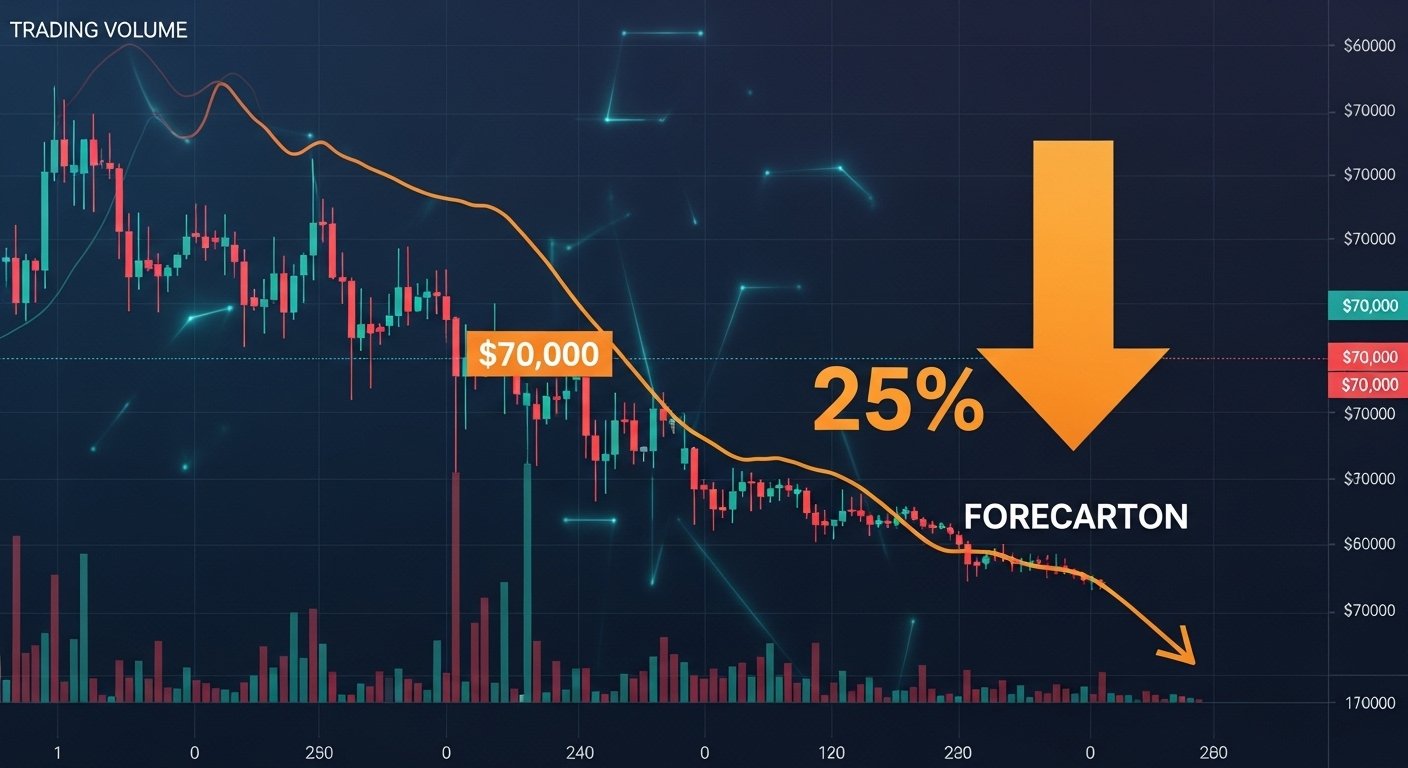
Bitcoin price prediction that has caught the attention of investors worldwide. According to recent technical analysis, Bitcoin (BTC) may experience a significant correction, potentially falling 25% below the $70,000 threshold. This Bitcoin price prediction comes at a critical juncture when digital asset markets are navigating macroeconomic uncertainties, regulatory developments, and shifting investor sentiment. Understanding the factors behind this forecast is essential for anyone holding or considering investing in the world’s largest cryptocurrency. Whether you’re a seasoned trader or a newcomer to the crypto space, this analysis will help you navigate the potential turbulence ahead and make informed decisions about your portfolio.
Current Bitcoin Market Landscape
The current state of Bitcoin reflects a complex interplay of technical indicators, market psychology, and fundamental developments. Over recent months, BTC price movements have demonstrated heightened volatility, with the cryptocurrency oscillating between support and resistance levels that have left many investors uncertain about the next major directional move. The digital asset landscape has evolved considerably since Bitcoin’s previous all-time highs, with institutional adoption increasing while retail participation experiences periodic waves of enthusiasm and retreat.
Market analysts examining the broader cryptocurrency ecosystem note that Bitcoin’s dominance continues to play a crucial role in overall market health. When Bitcoin experiences significant price corrections, altcoins typically follow suit with even more pronounced movements. This interconnectedness means that understanding Bitcoin’s trajectory becomes paramount for anyone involved in digital asset investment, regardless of which specific cryptocurrencies they hold in their portfolio.
Technical Analysis Behind the Bitcoin Price Prediction
The technical foundation supporting this Bitcoin price prediction relies on multiple charting patterns and indicators that have historically provided reliable signals for major price movements. Analysts point to the formation of a descending triangle pattern on higher timeframe charts, which traditionally signals bearish continuation when the asset is already in a downtrend. This pattern, combined with weakening momentum indicators, suggests that Bitcoin may be preparing for another leg down in its correction phase.
Key Technical Indicators Suggesting Downside Pressure
The Relative Strength Index (RSI) has been displaying divergence patterns that often precede significant price reversals. When Bitcoin’s price action creates higher highs while the RSI forms lower highs, this bearish divergence indicates that upward momentum is weakening despite price gains. Additionally, the Moving Average Convergence Divergence (MACD) indicator has generated bearish crossovers on multiple timeframes, reinforcing the technical case for further downside.
Volume analysis provides another critical piece of the puzzle in this cryptocurrency price forecast. Trading volume has been declining during recent price rallies, suggesting that buyers lack conviction and that any upward movements may represent temporary relief rather than genuine trend reversals. This volume profile, when combined with other technical factors, strengthens the argument for a potential decline toward the $52,500 level, representing a 25% drop from $70,000.
Chart Patterns and Historical Precedents
Historical chart analysis reveals that Bitcoin has experienced similar correction patterns during previous market cycles. The current setup bears resemblance to corrections witnessed in 2021 and earlier cycles, where Bitcoin underwent 30-40% drawdowns before establishing new bases for accumulation. These historical Bitcoin corrections typically occurred when the asset became overextended relative to its moving averages and needed to reset momentum indicators before resuming upward trends.
The fibonacci retracement levels add another layer to this technical analysis. The 61.8% retracement level, a mathematically significant point derived from the fibonacci sequence, aligns closely with the projected $52,500 target. Throughout Bitcoin’s history, major corrections have frequently found support at these key fibonacci levels, making them reliable reference points for BTC price targets.
Fundamental Factors Influencing Bitcoin’s Trajectory
Beyond technical analysis, several fundamental factors contribute to the bearish Bitcoin price prediction that analysts have put forward. The macroeconomic environment plays an outsized role in cryptocurrency valuations, with interest rate policies from central banks worldwide creating headwinds for risk assets including Bitcoin. When traditional financial markets experience stress, Bitcoin often trades with high correlation to equity markets, particularly technology stocks, rather than serving as the uncorrelated safe haven asset that some early proponents envisioned.
Regulatory Developments and Market Sentiment
Regulatory scrutiny continues to evolve across major jurisdictions, creating uncertainty that impacts cryptocurrency market dynamics. While some countries have embraced clearer frameworks for digital assets, others maintain restrictive stances that limit institutional participation and create compliance challenges for exchanges and service providers. These regulatory considerations influence investor confidence and can trigger sell-offs when negative developments emerge from key markets.
The sentiment surrounding Bitcoin adoption has also shifted as the technology faces questions about scalability, energy consumption, and real-world utility beyond speculative investment. While the Lightning Network and other layer-two solutions attempt to address transaction speed and cost issues, mainstream adoption for everyday payments remains limited. This reality check regarding Bitcoin’s practical applications contributes to periodic reassessments of fair value that can result in significant price corrections.
Market Cycles and Psychology in Cryptocurrency Trading
Understanding market psychology proves essential when evaluating any Bitcoin price prediction. The cryptocurrency market operates through distinct cycles characterized by euphoria, denial, fear, and capitulation. Currently, many indicators suggest the market may be transitioning from a phase of denial into fear, where investors who purchased at higher levels begin questioning their decisions and considering exits to preserve capital.
The Role of Leveraged Trading in Price Volatility
Leveraged positions amplify both gains and losses in cryptocurrency markets, creating conditions for rapid cascading liquidations when prices move against highly leveraged traders. Exchange data shows substantial open interest in Bitcoin futures and perpetual contracts, with many positions leveraged between 10x and 100x. When Bitcoin experiences sharp downward movements, these leveraged long positions face forced liquidation, creating selling pressure that pushes prices even lower in a self-reinforcing cycle.
The liquidation cascades witnessed during previous cryptocurrency market corrections have resulted in some of the most dramatic single-day price movements in Bitcoin’s history. If the predicted decline materializes, similar dynamics could accelerate the move toward the $52,500 target as overleveraged positions unwind. This mechanical aspect of crypto markets, driven by margin requirements and automated liquidations, adds a layer of risk that fundamentally differs from traditional asset markets.
Institutional Investment and Bitcoin’s Price Dynamics
Institutional participation in Bitcoin markets has grown substantially over recent years, with corporations, hedge funds, and even nations adding the cryptocurrency to their balance sheets. However, institutional investors typically employ more sophisticated risk management strategies than retail traders, meaning they may exit positions more decisively when technical and fundamental signals align for downside. The potential for institutional selling pressure represents a significant factor in the bearish price prediction.
Bitcoin ETFs and Their Market Impact
The approval and launch of spot Bitcoin exchange-traded funds (ETFs) in various jurisdictions created new channels for institutional and retail investment in the cryptocurrency. While these products initially drove substantial inflows and contributed to price appreciation, the ETF investment flows can reverse quickly based on broader market conditions and investor risk appetite. Redemptions from these products translate directly into selling pressure on underlying Bitcoin holdings, potentially exacerbating downward price movements.
Analysis of ETF flow data reveals that net inflows have slowed considerably from peak levels, with some products experiencing net outflows during recent weeks. This shift in investment fund dynamics suggests that the marginal buyer may be stepping back from the market, reducing demand while supply from miners and long-term holders seeking liquidity remains constant or increases.
Mining Economics and Selling Pressure
Bitcoin miners represent a constant source of potential selling pressure as they must liquidate portions of their mined BTC to cover operational expenses including electricity, equipment maintenance, and facility costs. The recent halving event reduced block rewards, increasing the production cost per Bitcoin and potentially forcing some miners to sell larger portions of their holdings to maintain operations. This miner selling pressure contributes to the supply-demand imbalance that could drive prices lower.
Hash Rate and Network Security Considerations
The Bitcoin network’s hash rate, which measures the computational power securing the blockchain, has implications for both security and price dynamics. When prices decline significantly, less efficient miners may be forced offline as their operations become unprofitable, temporarily reducing hash rate. While the network adjusts mining difficulty to compensate, these periods of transition can create uncertainty that weighs on investor confidence in Bitcoin.
The relationship between hash rate, mining difficulty, and price creates feedback loops that can amplify both upward and downward price movements. If the predicted 25% correction materializes, some mining operations will face profitability challenges, potentially leading to capitulation where these miners sell holdings accumulated during more profitable periods to sustain operations or exit the industry entirely.
Alternative Scenarios and Bullish Counterarguments
While the technical and fundamental analysis supports a bearish Bitcoin price prediction, responsible analysis requires considering alternative scenarios where BTC maintains support above $70,000 or even moves higher. Several factors could invalidate the bearish thesis and lead to renewed upward momentum in cryptocurrency markets.
Potential Catalysts for Price Support
Unexpected positive developments in regulatory frameworks could shift sentiment rapidly and attract new capital to Bitcoin markets. If major jurisdictions implement favorable regulations that provide clarity for institutional investors while protecting consumers, the resulting influx of capital could overwhelm technical bearish signals. Additionally, macroeconomic surprises such as central banks pivoting to more accommodative monetary policies could reignite risk appetite and benefit Bitcoin as a risk asset.
Technological breakthroughs addressing Bitcoin’s scalability challenges or novel use cases emerging for the blockchain could also alter the fundamental value proposition and attract new users and investors. The cryptocurrency ecosystem continues evolving, and innovations in decentralized finance, tokenization of real-world assets, or integration with traditional financial systems could provide fundamental support for Bitcoin prices.
Risk Management Strategies for Bitcoin Investors
Regardless of whether the bearish Bitcoin price prediction materializes, investors should employ robust risk management strategies to protect capital and optimize returns. Position sizing becomes critical in volatile markets, with prudent investors allocating only portions of their portfolios they can afford to lose to speculative assets like cryptocurrencies.
Dollar-Cost Averaging and Strategic Accumulation
For investors maintaining long-term conviction in Bitcoin’s value proposition despite near-term bearish signals, dollar-cost averaging provides a disciplined approach to building positions without attempting to time exact market bottoms. By investing fixed amounts at regular intervals, investors reduce the impact of volatility and avoid the psychological pitfalls of trying to catch falling knives. If Bitcoin prices decline 25% as predicted, dollar-cost averaging allows investors to accumulate at progressively lower prices.
Stop-loss orders represent another essential risk management tool, allowing investors to define maximum acceptable losses in advance and automatically exit positions if those thresholds are breached. While stop-losses can result in unfortunate exits before reversals, they prevent catastrophic losses when corrections extend beyond expectations. Setting stop-losses based on technical support levels rather than arbitrary percentages improves the probability of avoiding premature exits while still protecting against severe drawdowns.
Comparing Bitcoin to Traditional Assets During Market Stress
The correlation between Bitcoin and traditional assets like stocks and bonds provides context for understanding how the cryptocurrency might perform during broader market stress. Recent years have seen Bitcoin trading with increased correlation to equity markets, particularly the Nasdaq index heavy with technology stocks. This relationship suggests that Bitcoin may not provide the diversification benefits during market downturns that some investors seek.
Safe Haven Asset Debate
The question of whether Bitcoin functions as a safe haven asset similar to gold continues generating debate among analysts and investors. While Bitcoin’s fixed supply of 21 million coins creates scarcity similar to precious metals, its short history and volatility make it difficult to definitively classify as a safe haven. During periods of extreme market stress, investor flight to quality typically benefits traditional safe havens like US Treasury bonds and gold, while Bitcoin has experienced mixed performance.
The narrative around Bitcoin as “digital gold” requires nuanced understanding. While the cryptocurrency shares certain characteristics with gold including scarcity and decentralization, it lacks gold’s millennia-long track record as a store of value and its deep integration into central bank reserves and jewelry markets. These differences mean that Bitcoin’s behavior during corrections may differ substantially from gold’s historical patterns.
The Impact of Macroeconomic Conditions on Cryptocurrency
Global macroeconomic conditions exert powerful influence over cryptocurrency markets, with monetary policy decisions, inflation rates, and economic growth trajectories all affecting investor risk appetite and asset allocation decisions. The current environment features persistent inflation concerns, elevated interest rates by historical standards, and uncertainty about economic growth prospects across major economies. These conditions generally create headwinds for speculative assets including Bitcoin.
Interest Rates and Opportunity Cost
When interest rates remain elevated, investors can earn meaningful returns from relatively safe assets like government bonds and high-yield savings accounts. This reality increases the opportunity cost of holding non-yielding assets like Bitcoin, potentially reducing demand from investors who prioritize income generation alongside capital appreciation. The relationship between interest rates and Bitcoin prices has demonstrated negative correlation historically, with rate increases typically coinciding with cryptocurrency weakness.
Central bank balance sheet policies also influence cryptocurrency markets through their impact on liquidity conditions. Quantitative tightening, where central banks reduce their holdings of government bonds and other securities, removes liquidity from financial markets and typically creates challenging conditions for risk assets. The ongoing balance sheet reduction by major central banks represents a structural headwind for Bitcoin price appreciation that could persist for quarters or years.
On-Chain Metrics and Their Predictive Value
Blockchain analysis provides unique insights into Bitcoin markets through on-chain metrics that track actual network activity, wallet behaviors, and coin movements. Several on-chain indicators currently flash warning signals that align with the bearish Bitcoin price prediction put forward by technical analysts.
Exchange Inflows and Whale Activity
The movement of Bitcoin to and from cryptocurrency exchanges provides clues about investor intentions. Large transfers to exchanges typically precede selling activity, while withdrawals to private wallets suggest accumulation and long-term holding intentions. Recent on-chain data shows increasing Bitcoin exchange inflows, particularly from addresses holding substantial amounts (often called “whales”), suggesting that large holders may be preparing to reduce positions.
The spent output profit ratio (SOPR) and other profitability metrics indicate that many Bitcoin holders currently sit on unrealized profits, creating potential supply that could hit markets if holders decide to realize gains. When combined with technical signals suggesting weakness, this on-chain profit-taking potential reinforces the case for near-term downside.
Long-Term Bitcoin Value Proposition Despite Near-Term Weakness
While near-term technical analysis suggests the potential for a 25% correction in Bitcoin prices, the long-term value proposition for the cryptocurrency remains intact according to many analysts and advocates. Bitcoin’s decentralized nature, fixed supply schedule, and global accessibility provide characteristics that differentiate it from fiat currencies subject to inflation through unlimited issuance.
Adoption Trends and Network Effects
Despite cyclical price fluctuations, Bitcoin adoption metrics including wallet creation, transaction volumes, and merchant acceptance continue showing long-term growth trends. These network effect dynamics suggest that Bitcoin’s utility and value proposition strengthen over time as more users, businesses, and institutions interact with the network. While short-term price movements may discourage some participants, the underlying technology and use cases continue developing.
The Lightning Network and other scaling solutions continue maturing, addressing earlier criticisms about Bitcoin’s transaction throughput and fees. As these technologies achieve greater adoption, Bitcoin’s practical utility for payments and other use cases improves, potentially supporting higher valuations over multi-year timeframes regardless of near-term corrections.
Preparing Your Portfolio for Potential Bitcoin Volatility
Investors holding Bitcoin or considering positions should take proactive steps to prepare portfolios for the potential volatility implied by bearish price predictions. Portfolio rebalancing becomes essential, ensuring that cryptocurrency allocations remain appropriate relative to overall risk tolerance and financial goals.
Diversification Across Cryptocurrencies and Asset Classes
While Bitcoin dominates cryptocurrency market capitalization, diversification across different digital assets can reduce portfolio volatility and provide exposure to various use cases and technological approaches. However, investors should recognize that most cryptocurrencies demonstrate high correlation with Bitcoin during major market movements, limiting diversification benefits within the crypto ecosystem alone.
True portfolio resilience requires diversification across uncorrelated asset classes, including stocks, bonds, real estate, and commodities. This approach ensures that cryptocurrency portfolio volatility doesn’t jeopardize overall financial security, allowing investors to maintain positions through difficult periods without forced liquidation at disadvantageous prices.
Conclusion
The bearish Bitcoin price prediction, suggesting a potential 25% decline below $70,000, deserves serious consideration from investors, supported as it is by technical analysis, fundamental factors, and on-chain metrics. However, cryptocurrency markets have repeatedly demonstrated their capacity to surprise both bears and bulls, making dogmatic predictions dangerous regardless of direction. The prudent approach involves acknowledging the risks highlighted by this analysis while maintaining flexibility to adjust as market conditions evolve.
Whether you’re a long-term Bitcoin believer viewing potential corrections as accumulation opportunities or a trader seeking to profit from near-term movements, understanding the factors driving this Bitcoin price prediction empowers better decision-making. Implement robust risk management strategies, stay informed about technical and fundamental developments, and ensure your cryptocurrency allocation aligns with your broader financial plan and risk tolerance.
As Bitcoin market dynamics continue evolving through 2026 and beyond, staying educated and adaptable will prove more valuable than trying to predict exact price movements. Monitor the key levels discussed in this analysis, watch for confirmation or invalidation of technical patterns, and make adjustments to your positions based on your individual circumstances and investment objectives.
See more: Bitcoin Price Prediction Warns BTC Could Fall to Zero | Saxo Bank
