

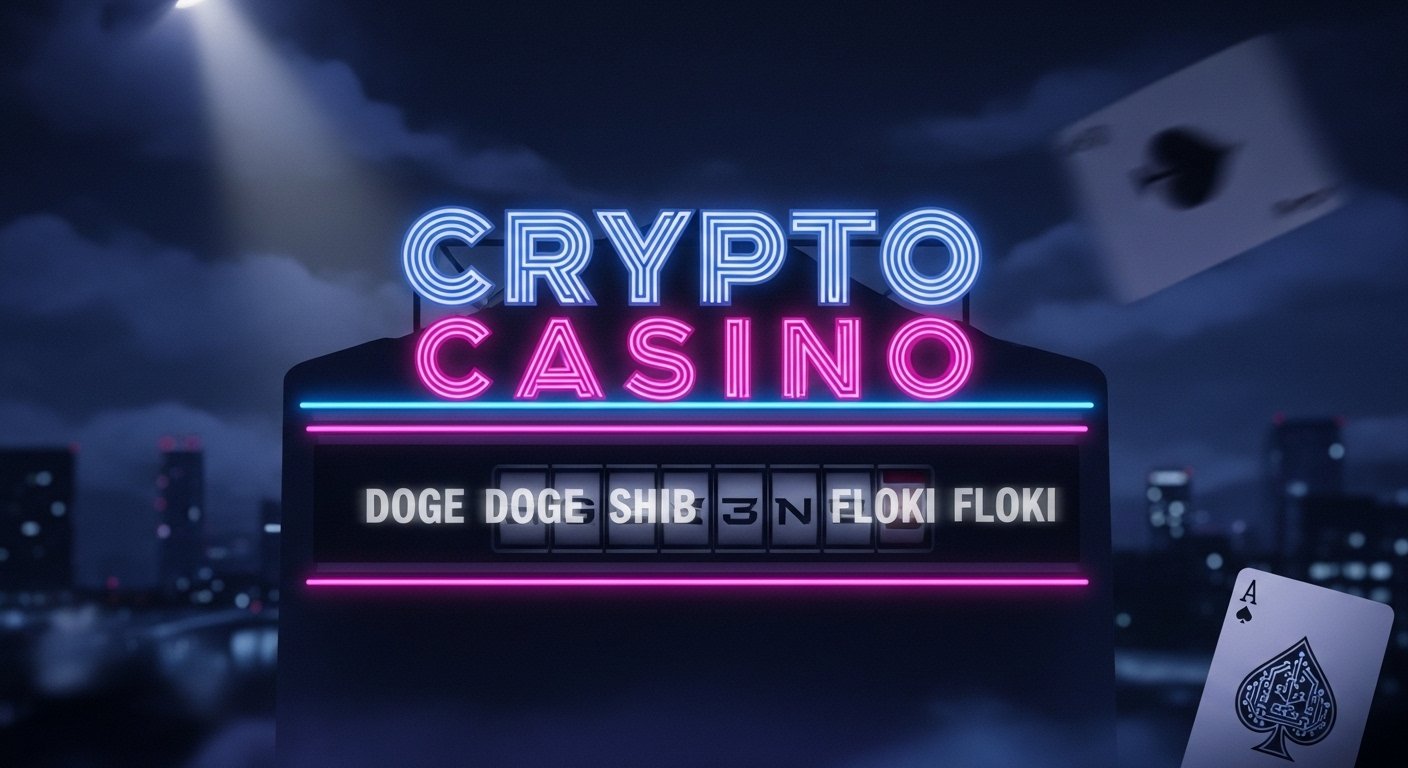
If you’ve spent any time scrolling through financial Twitter or Reddit’s investing forums, you’ve almost certainly stumbled upon the phrase: crypto meme coin casino. It’s a phrase that cuts straight to the heart of a debate dividing investors, technologists, and regulators alike. Are cryptocurrencies — particularly the wave of meme coins that has swept the market — nothing more than a digital casino dressed up in blockchain clothes? Or is there genuine financial utility hiding beneath the chaos?
The question is not as simple as it sounds. The crypto market has given birth to extraordinary legitimate wealth — but it has also enabled some of the most spectacular financial losses in modern history, fueled largely by speculative altcoin trading and the unpredictable rise and fall of meme-driven tokens. In this article, we’ll explore both sides of the debate with honesty and depth, helping you understand when crypto becomes a genuine investment vehicle and when it devolves into pure speculation.
What Exactly Is a Meme Coin Casino in Crypto?
To understand whether the crypto meme coin casino label is fair, we first need to define what meme coins actually are. A meme coin is a cryptocurrency that originated from an internet joke, viral trend, or cultural moment rather than a specific technological breakthrough or real-world use case. Dogecoin (DOGE) is the most famous example, launched in 2013 as a parody of Bitcoin. Since then, hundreds of imitators have followed — Shiba Inu (SHIB), Pepe Coin (PEPE), Floki Inu, and thousands more.
These tokens share a common DNA: they’re driven overwhelmingly by social media hype, celebrity endorsements, and community sentiment rather than any measurable fundamental value. When Elon Musk tweets about Dogecoin, its price can surge by double digits in minutes. When the hype dies down, prices can crater just as fast. This pattern of boom-bust behavior is precisely why critics describe the phenomenon as a crypto gambling experience rather than a legitimate investment strategy.
What makes the casino analogy particularly apt is the structure of the game itself. In a traditional casino, the house always has an edge. In the meme coin market, early investors — often the project’s developers or coordinated whale wallets — hold enormous quantities of the token. When retail investors pile in, the early holders sell, collapsing the price. This mechanic, known as a pump-and-dump scheme, is not hypothetical. It’s one of the most documented patterns in crypto market history.
The Legitimate Side of Crypto That Meme Coins Overshadow
It would be intellectually dishonest to paint all of crypto with the same brush as the crypto meme coin casino. Bitcoin, the original cryptocurrency, was built on a foundational premise: decentralized, peer-to-peer digital money that no government or institution could control. Ethereum introduced programmable smart contracts, giving birth to an entire ecosystem of decentralized finance (DeFi), non-fungible tokens (NFTs), and tokenized real-world assets.
These technologies have genuine, measurable utility. Decentralized finance allows people in countries with unstable banking systems to access lending, saving, and investment services without needing a traditional bank. Smart contract technology is being used to automate complex financial agreements, reduce fraud in supply chains, and create transparent voting systems. These are not the hallmarks of a casino — they are the hallmarks of a financial revolution.
The problem is that the noise created by speculative meme coin trading drowns out this signal. When mainstream media covers crypto, it often focuses on the most sensational stories: the teenager who turned $1,000 into $1 million on a dog coin, or the investor who lost their life savings chasing the next altcoin pump. These stories are real, but they do not represent the entire landscape of digital assets.
Bitcoin vs. Meme Coins: Why the Distinction Matters
Bitcoin has a fixed supply of 21 million coins, making it inherently deflationary. It has survived over 15 years of extreme volatility, regulatory attacks, exchange collapses, and market crashes — and it has always recovered to new all-time highs. This track record does not exist in a vacuum. It reflects genuine store-of-value properties that institutional investors, sovereign wealth funds, and major corporations have begun to recognize.
Meme coins, by contrast, typically have no supply cap, no clear utility, and no development roadmap beyond generating buzz. Many are forked copies of other projects with a new name and logo slapped on. The volatility in meme coin investing is categorically different from Bitcoin’s volatility — it is speculative turbulence with no underlying anchor of value. Confusing these two asset types is one of the most dangerous mistakes new crypto investors make.
Is Crypto Just a Meme Coin Casino? Understanding the Real Risks
The answer to whether crypto is just a meme coin casino depends almost entirely on how you participate. If your crypto journey consists of chasing trending tokens on TikTok, buying coins with cartoon dog logos, and panic-selling at the first dip, then yes — your experience of crypto will very much resemble gambling. The outcomes will be similarly random and the emotional rollercoaster will be identical.
But crypto market risk can be managed with discipline and knowledge. Serious investors who allocate a small portion of their portfolio to established cryptocurrencies, practice dollar-cost averaging, store assets in hardware wallets, and research the technology behind the projects they invest in — these investors are engaging with an emerging asset class, not spinning a roulette wheel.
The distinction lies in intention and methodology. Crypto gambling behavior involves chasing short-term price movements with money you cannot afford to lose, ignoring due diligence, and treating market momentum as a substitute for fundamental analysis. Responsible crypto investing means understanding what you own, why you own it, and having a clear plan for both profit-taking and loss management.
How Meme Coin Mania Damages the Broader Crypto Ecosystem
The rise of the crypto meme coin casino culture does real damage beyond the wallets of individual retail investors. It attracts negative regulatory attention, encourages the kind of market manipulation that legitimate blockchain projects are trying to distance themselves from, and creates a credibility gap that slows institutional adoption.
Every time a celebrity-endorsed meme coin collapses and wipes out millions of dollars in retail wealth, regulators feel more justified in calling for sweeping restrictions on the entire crypto industry. The fallout from high-profile collapses like the SQUID token rug pull, various celebrity-endorsed pump-and-dumps, and the endless parade of rug pull scams taints the reputation of genuinely innovative projects. It creates a perception problem that the entire industry must work to overcome.
How to Spot the Difference Between Crypto Investing and Meme Coin Gambling
Not every altcoin is a meme coin, and not every meme coin is worthless. Some tokens that began as jokes have evolved into projects with real communities and development ecosystems. But the ability to differentiate between legitimate crypto projects and pure speculation is a skill every investor needs to develop.
Start by asking whether the project has a working product or a credible development team. Does the white paper describe a genuine technical problem and a realistic solution? Is the token’s distribution transparent, or do anonymous wallets control the majority of the supply? Does the project have independent audits of its smart contracts? These are not exotic questions — they are the baseline of responsible crypto due diligence.
Also pay attention to the marketing tactics of a project. Projects that rely primarily on social media influencers, countdown timers, and promises of guaranteed returns are exhibiting classic red flags. Legitimate crypto projects spend their resources on technology, security, and real-world partnerships — not on hiring celebrities to post about them on Instagram.
Red Flags That Signal a Crypto Meme Coin Casino Mentality
There are specific warning signs that a project is built for speculation rather than value creation. Anonymous or unverifiable founding teams are a major red flag. So is the absence of a development roadmap, a lack of third-party audits, and an unusually large percentage of tokens held by a small number of wallets. If a token’s community primarily discusses price targets rather than technology or use cases, that’s a telling sign of speculative altcoin behavior.
See more;Trump Coin and Meme Tokens Blamed for Crypto Winter by Ross Gerber
