

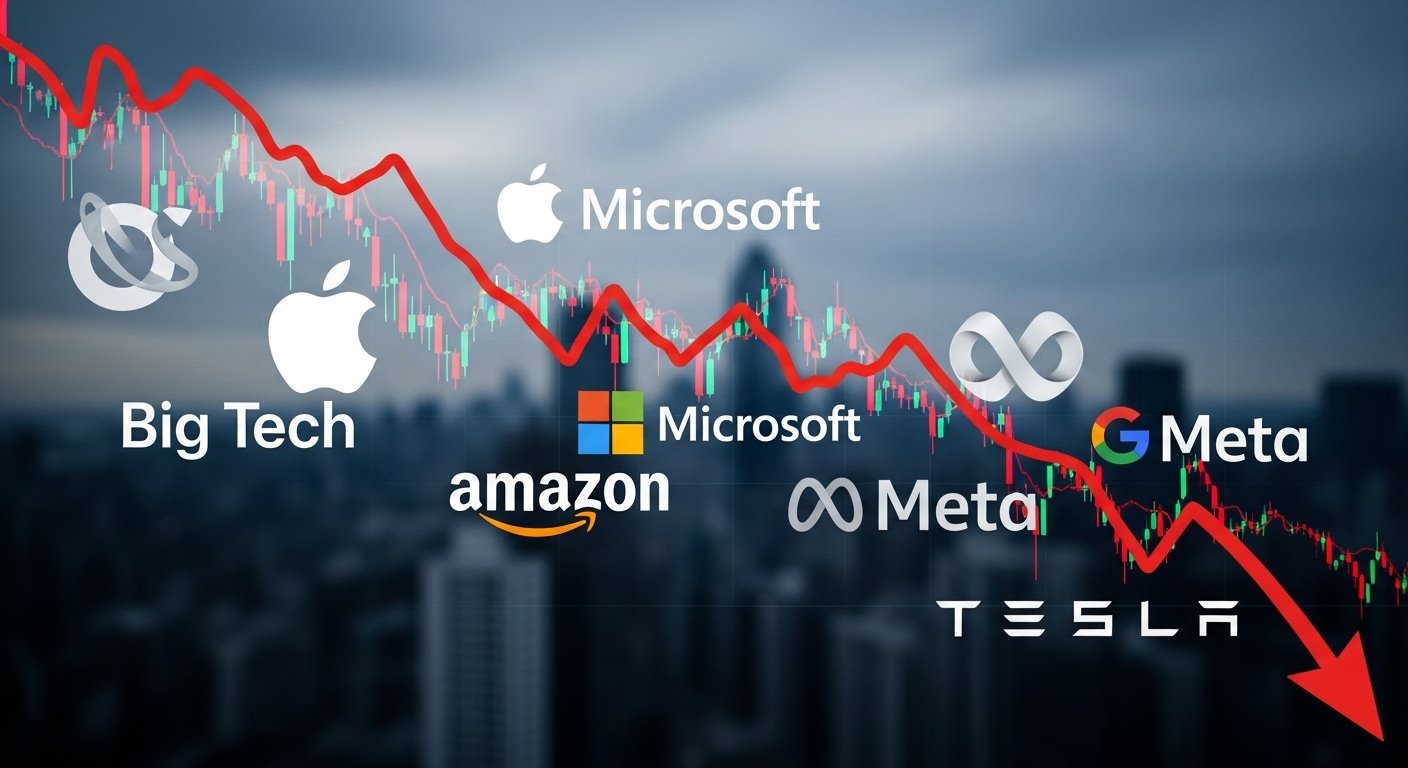
The American stock market experienced another turbulent trading session as Big Tech stocks pull Wall Street lower once more, sending ripples of concern through investor portfolios nationwide. Major technology companies that have long served as pillars of market strength are now becoming sources of significant downward pressure, leaving many market participants questioning whether this represents a temporary correction or the beginning of a more sustained downturn. The collective decline in Big Tech stocks has erased billions in market capitalization within days, forcing investors to reassess their positions in what were once considered the safest bets in the market. This latest selloff underscores the fragility of market sentiment when concentrated positions in technology giants begin to unwind, creating cascading effects across broader market indices.
Why Technology Giants Are Dragging Markets Down
The phenomenon of Big Tech stocks pull Wall Street lower isn’t occurring in isolation but rather reflects a confluence of economic pressures, regulatory concerns, and shifting investor sentiment. Technology companies including Apple, Microsoft, Amazon, Alphabet, Meta, and Nvidia have collectively lost substantial value as investors rotate away from growth stocks that dominated the previous bull market. These companies, which comprise a disproportionate percentage of major index weightings, possess the mathematical ability to move entire markets single-handedly due to their massive market capitalizations.
Several fundamental factors are contributing to this sustained pressure on technology stocks. Rising interest rates make future earnings less valuable in present-day terms, which particularly impacts growth-oriented companies that trade at premium valuations. When discount rates increase, the theoretical value of future cash flows diminishes, making high-multiple technology stocks less attractive compared to value-oriented alternatives or fixed-income securities offering more competitive yields.
Additionally, concerns about artificial intelligence spending and returns on investment have created uncertainty around companies making massive capital expenditures in AI infrastructure. Investors are beginning to question whether the billions being poured into AI development will generate proportionate returns, or if this represents another technology bubble inflating before an inevitable correction.
The Ripple Effect Across Wall Street Indices
When Big Tech stocks pull Wall Street lower, the impact extends far beyond the technology sector itself. The S&P 500 index, which gives greater weight to larger companies, becomes particularly vulnerable to declines in mega-cap technology stocks. Similarly, the Nasdaq Composite, with its heavy technology concentration, experiences magnified movements corresponding to Big Tech performance.
This interconnectedness means that even investors who believe they hold diversified portfolios may find themselves overexposed to technology sector risks. Many popular index funds and exchange-traded funds concentrate holdings in the same handful of technology giants, creating hidden correlation risks that only become apparent during selloffs. When these companies decline simultaneously, the diversification benefits that investors expect from broad market exposure partially evaporate.
The wealth effect also plays a significant role in how Big Tech stocks influence broader economic confidence. As technology stocks decline, investors feel less wealthy, potentially reducing consumption and investment spending. This psychological impact can translate into real economic consequences, especially in regions with high concentrations of technology employment and stock-based compensation.
Valuation Concerns Driving the Technology Stock Selloff
One primary reason Big Tech stocks pull Wall Street lower relates to fundamental valuation metrics that have stretched beyond historical norms. Many technology companies trade at price-to-earnings ratios significantly above their long-term averages, suggesting that expectations for future growth may have become unrealistically optimistic. When reality falls short of these elevated expectations, even modestly disappointing earnings reports can trigger sharp price declines.
The comparison between current valuations and potential growth rates reveals a disconnect that sophisticated investors are beginning to address through portfolio rebalancing. Technology stocks that once seemed reasonably priced during an era of near-zero interest rates now appear expensive as the cost of capital rises and alternative investments offer more attractive risk-adjusted returns.
Moreover, concerns about market concentration have intensified as the so-called “Magnificent Seven” technology stocks have come to dominate index performance. This concentration creates systemic risks, as the health of entire indices becomes dependent on the continued success of just a handful of companies. When these companies stumble, there are insufficient alternative leaders to offset their decline.
Regulatory Headwinds Facing Major Technology Companies
Beyond valuation concerns, Big Tech stocks face mounting regulatory pressures from governments worldwide. Antitrust investigations, data privacy regulations, and proposed legislation targeting technology platforms create uncertainty about future profitability and business model sustainability. These regulatory risks represent a departure from the relatively laissez-faire environment that allowed technology companies to grow largely unconstrained for the past two decades.
In the United States, both political parties have expressed interest in reining in the power of technology giants, suggesting that regulatory pressure will persist regardless of electoral outcomes. European regulators have proven even more aggressive, implementing strict data protection rules and initiating antitrust proceedings against multiple American technology companies. These regulatory environments create compliance costs and operational constraints that could limit future growth prospects.
The potential for forced divestitures or structural changes to business models represents a tail risk that investors are beginning to price into Big Tech stocks. While the probability of dramatic regulatory intervention remains uncertain, even modest increases in this risk premium can justify lower valuation multiples and contribute to the broader pattern of Big Tech stocks pull Wall Street lower.
Interest Rate Impact on Growth Stock Valuations
The Federal Reserve’s monetary policy stance exerts tremendous influence on technology stock valuations. As interest rates rise or remain elevated, the present value calculation for future earnings shifts unfavorably for Big Tech stocks that derive much of their theoretical value from earnings expected many years in the future. This mathematical relationship between discount rates and stock valuations creates mechanical selling pressure on growth stocks when interest rate expectations increase.
The opportunity cost of holding technology stocks also rises when fixed-income alternatives offer more attractive yields. Investors who previously accepted minimal current income in exchange for growth potential now face a different calculus when government bonds or corporate debt instruments provide meaningful yields without equity risk. This shifting risk-reward landscape naturally leads to capital reallocation away from growth-oriented Big Tech stocks toward income-generating alternatives.
Furthermore, higher interest rates increase borrowing costs for technology companies, potentially constraining their ability to fund ambitious expansion projects or make strategic acquisitions. While the largest technology giants maintain fortress balance sheets with substantial cash reserves, the broader ecosystem of technology companies faces financial pressure that could slow innovation and competitive dynamics.
Investor Sentiment and Market Psychology
The phenomenon of Big Tech stocks pull Wall Street lower also reflects changing market psychology and investor sentiment. After years of consistently strong performance, technology stocks have attracted momentum-driven investors who chase performance rather than buying based on fundamental analysis. When performance reverses, these same momentum investors quickly exit positions, accelerating declines through technical selling pressure.
Fear of missing out has transformed into fear of staying in, creating a self-reinforcing cycle of selling pressure. Social media and financial news amplify market movements, spreading concern rapidly among retail investors who may panic sell at precisely the wrong time. This behavioral dynamic can disconnect Big Tech stock prices from underlying fundamentals for extended periods, creating both risks and opportunities depending on investor time horizons.
The concentration of wealth in technology stocks among certain demographic groups also influences selling patterns. Younger investors who accumulated technology-heavy portfolios during the pandemic-era bull market now face their first significant drawdown, testing their risk tolerance and investment discipline. How these investors respond to adversity will partially determine whether the current selloff represents a healthy correction or the beginning of a more severe bear market.
Comparing Current Conditions to Historical Technology Selloffs
Understanding whether Big Tech stocks pull Wall Street lower as part of a normal market cycle or something more concerning requires historical context. The dot-com bubble of the late 1990s provides an instructive comparison, though important differences exist between then and now. Today’s technology giants generate substantial profits and cash flows, unlike many unprofitable internet companies that collapsed in the early 2000s.
However, similarities include extended valuations, widespread public participation in technology investing, and the concentration of market gains in a small number of companies. The psychological dynamics of speculation, fear of missing out, and eventual capitulation show remarkable consistency across market cycles, even as the specific narratives and companies change.
Previous technology selloffs have typically required extended periods for recovery, even for fundamentally sound companies. Investors who bought technology stocks at peak valuations in 2000 often waited more than a decade to break even, highlighting the importance of entry points and valuation discipline. Whether current Big Tech stocks face similar recovery timelines depends on multiple factors including underlying business quality, macroeconomic conditions, and the severity of the eventual bottom.
Strategic Considerations for Investors During Technology Stock Weakness
As Big Tech stocks pull Wall Street lower, investors must decide whether to view the decline as a buying opportunity or a warning signal requiring defensive positioning. Dollar-cost averaging into quality technology stocks during periods of weakness has historically generated strong long-term returns, but this strategy requires patience and psychological fortitude to maintain conviction during extended downturns.
Diversification becomes increasingly important as concentration risks in Big Tech stocks become apparent. Investors should evaluate their overall portfolio exposure to technology and consider whether their allocations align with their risk tolerance and investment objectives. Rebalancing toward other sectors, geographic regions, or asset classes can reduce portfolio volatility and provide exposure to potential outperformers during technology stock weakness.
For those maintaining positions in technology giants, understanding the underlying business fundamentals becomes crucial for distinguishing between temporary price weakness and deteriorating business quality. Companies with sustainable competitive advantages, strong balance sheets, and reasonable valuations relative to growth prospects remain attractive long-term holdings despite short-term price volatility.
The Role of Algorithmic Trading in Amplifying Market Movements
Modern market structure contributes to the pattern of Big Tech stocks pull Wall Street lower through algorithmic trading systems that can amplify price movements in both directions. High-frequency trading firms, quantitative hedge funds, and passive index rebalancing create mechanical buying and selling pressure that exacerbates volatility, particularly during periods of market stress.
When technology stocks decline, algorithmic systems may automatically reduce exposure, creating additional selling pressure that drives prices lower still. This feedback loop can temporarily disconnect prices from fundamental values, creating opportunities for patient investors willing to provide liquidity during periods of mechanical selling. Understanding these market structure dynamics helps investors maintain perspective during seemingly irrational price movements.
The growth of passive investing also influences how Big Tech stocks move markets. As index funds accumulate increasing market share, the marginal price-setting role of active managers diminishes, potentially reducing market efficiency and increasing the likelihood of synchronized movements. When everyone owns the same stocks through index funds, selling pressure naturally concentrates in the largest index constituents.
Global Economic Factors Influencing Technology Stock Performance
The phenomenon of Big Tech stocks pull Wall Street lower occurs within a broader global economic context that shapes investor risk appetite and sectoral preferences. Concerns about economic growth, trade tensions, currency fluctuations, and geopolitical instability all influence how investors value growth-oriented technology stocks relative to defensive alternatives.
Multinational technology giants face particular sensitivity to global economic conditions due to their international revenue exposure. Currency headwinds, varying regional growth rates, and differing regulatory environments create complexity that investors must assess when determining appropriate valuations. Economic weakness in key markets like China or Europe can significantly impact the growth prospects of companies generating substantial revenue internationally.
Additionally, the strength of the dollar influences the reported earnings of American technology companies with international operations. When the dollar appreciates, foreign revenue translates into fewer dollars, creating a headwind to reported earnings growth even when underlying business performance remains strong. These currency effects can contribute to disappointing earnings reports that trigger selloffs in Big Tech stocks.
Conclusion
The recurring pattern of Big Tech stocks pull Wall Street lower serves as a reminder that even the highest-quality companies experience periods of price weakness that test investor conviction. While the immediate outlook for technology stocks remains clouded by valuation concerns, regulatory uncertainty, and macroeconomic headwinds, the long-term investment case for well-managed technology companies with sustainable competitive advantages remains compelling for patient investors.
Those seeking to navigate the current environment successfully should focus on fundamental business quality rather than short-term price movements, maintain appropriate diversification to limit concentration risk, and resist the temptation to make emotional decisions during periods of volatility. The current selloff in Big Tech stocks may ultimately present attractive entry points for investors with long time horizons and the discipline to invest when others are fearful.
Whether you’re a seasoned investor or someone just beginning to understand how Big Tech stocks pull Wall Street lower affects your portfolio, now is the time to review your investment strategy, ensure your risk tolerance aligns with your holdings, and position yourself to capitalize on opportunities that market dislocations inevitably create. Stay informed, remain disciplined, and remember that the greatest investment opportunities often emerge during periods of maximum uncertainty.
See more;Crypto Projects Fail 2025: 11.6M Meme Coins Collapse Analysis
