

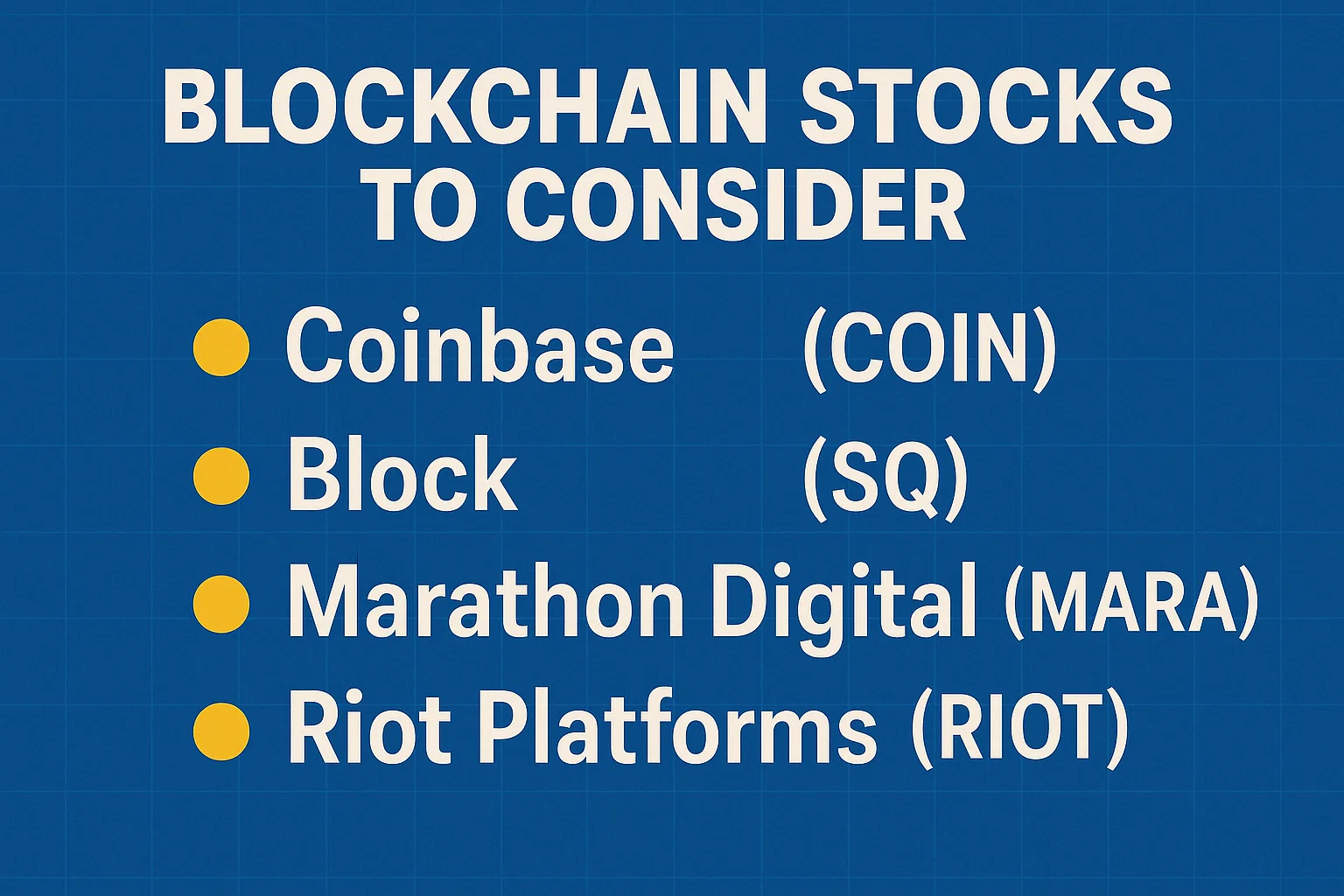
When blockchain technology surges into the spotlight, equity markets tend to follow. As of October 13, enthusiasm is running hot again thanks to record Bitcoin prices, accelerating spot Bitcoin ETF inflows, and a new wave of institutional adoption. In the past week alone, global crypto ETFs reportedly drew record cash as Bitcoin notched all-time highs above $126,000, a sign that traditional money is leaning into digital assets rather than shying away from them. Blockchain Stocks To Consider.
That rush is reshaping the investable landscape for “blockchain stocks”—public companies whose revenue, balance sheet, or growth vectors are tied to cryptocurrency, tokenization, or the broader Web3 stack. It includes exchanges, miners, payments, and fintech firms, and market-plumbing names that benefit from derivatives activity. Crucially, the quality and risk vary widely across these groups. This guide breaks down where the momentum is coming from, what’s changed post-halving for Bitcoin mining, and which catalysts—or landmines—matter from here. This is educational research, not financial advice. Always do your own diligence and consider your risk tolerance.
The macro tailwind: ETF flows, price discovery, and liquidity
Bitcoin’s rally has coincided with surging spot Bitcoin ETF demand in the U.S., where BlackRock’s iShares Bitcoin Trust (IBIT) has rapidly become one of the most profitable ETFs at the firm and is now nearing the $100 billion AUM club. Several independent tallies show multi-billion-dollar weekly inflows in early October, reinforcing liquidity and price discovery across the asset class.
On the derivatives side, activity at the CME—home to cash-settled Bitcoin futures and options—has intensified. CME’s open interest in Bitcoin futures has overtaken offshore venues at times this year, and recent market pages show robust volume and open interest across near-dated contracts, signaling deepening institutional participation in regulated markets. For publicly traded firms, that matters because it tends to lift volumes, spreads, and customer activity tied to digital asset trading, hedging, and custody.
Category 1: listed exchanges and prime brokers
Coinbase (COIN): volume-sensitive with diversification levers
Coinbase remains the marquee U.S. on-ramp for retail and institutions, and it is highly sensitive to volumes, volatility, and asset prices. The company’s latest investor materials for Q2 2025 outline the core mix of trading, staking, custody, and subscription services that help smooth earnings through the cycle. In high-volatility periods—like early October—volumes, spreads, and fee capture typically see a lift, benefiting revenue and take-rate dynamics even before considering any product-led growth.
Coinbase’s strategic moat is not just retail flow; it’s also institutional prime services, custody for ETFs, and developer platforms. As tokenization of real-world assets grows and institutional rails mature, those adjacencies can compound. The risk case remains regulatory complexity and cyclicality; however, the presence of regulated spot ETFs drawing record assets arguably supports the compliance-first model that Coinbase has pursued.
Category 2: corporate-treasury proxy for Bitcoin
Strategy (formerly MicroStrategy) (MSTR): a leveraged BTC balance sheet
MicroStrategy—rebranded “Strategy” in some reports—remains the largest corporate holder of Bitcoin, functioning almost like an operating company with a massive BTC treasury. Recent coverage indicates holdings north of 640,000 BTC with an average purchase price near $74,000, making the equity extremely sensitive to spot price moves and accounting for fair-value swings. In the first week of October, analysts highlighted multibillion-dollar fair-value appreciation as BTC ripped to fresh highs.
For equity investors, this is a high-beta way to express a BTC view. Upside can be explosive during bull markets, but drawdowns are equally fierce. Understanding the company’s debt profile, conversion features, and any at-the-market issuance is essential because capital raises at cycle peaks can alter per-share exposure.
Category 3: Bitcoin miners—post-halving economics favor scale
April 2024’s halving cut block rewards from 6.25 BTC to 3.125 BTC, compressing miner revenue per terahash and elevating the importance of low-cost power, efficient fleets, and disciplined treasury management. By April 2025, industry hashprice metrics had roughly halved from pre-halving levels, underlining that only the most efficient miners gain share while higher-cost players consolidate or pivot into HPC/AI hosting.
Below are several publicly traded miners publishing monthly production updates—useful for tracking execution, fleet efficiency, treasury strategy, and expansion plans.
CleanSpark (CLSK): scale, treasury flexibility, and HPC option value
CleanSpark’s September 2025 update highlighted continued operational momentum, including a $200 million expansion of its Bitcoin-backed credit line, plus leadership hires. A separate analyst note this week flagged early steps toward building a high-performance computing (HPC) pipeline—potentially a complementary revenue stream that monetizes data-center expertise outside pure mining. For a miner, that diversification can reduce cyclicality and monetize stranded or interruptible power profiles.
With BTC near record highs and an on-balance-sheet stack of coins, CleanSpark retains optionality to finance growth through a blend of operations, treasury, and credit. The flip side is miner cyclicality, power-price risk, and competition for efficient ASICs. Investors should stress-test cash costs per BTC under lower price scenarios to avoid extrapolating from peak conditions.
Marathon Digital (MARA): large treasury, steady monthly cadence
Marathon’s September update showed 736 BTC produced, 218 blocks won, and BTC holdings growing to 52,850—an important signal on treasury strategy and scale. As one of the largest public miners by self-mined BTC, Marathon operates as a high-beta cyclical tied to price, difficulty, and curtailment dynamics. Monthly disclosures let investors track fleet utilization and efficiency through the cycle.
The bull case rests on operational scale and access to capital; the bear case is sensitivity to network difficulty and power costs. For valuation, monitor enterprise value per exahash and cost per mined BTC versus peers.
Riot Platforms (RIOT): production detail and cost signals
Riot’s September update reported 445 BTC produced—a sequential dip from August—alongside a jump in all-in power cost month-over-month, a reminder that even efficient operators face volatile input costs. Riot’s news feed and press materials also frame expansion plans and hosting initiatives across its large Texas footprint, which can create upside via power-market strategies and demand-response programs.
For shareholders, cost transparency is a feature, not a bug; it helps benchmark the business versus other miners and flags when hash rate additions are outpacing energy savings.
Bitdeer (BTDR): vertical integration and new rigs
Bitdeer has leaned into vertical integration, launching SEALMINER A3 rigs and lifting self-mining hashrate by 35% to 30 EH/s as of its August operations update. Its Q2 2025 results and subsequent updates show a company aiming to control more of its hardware stack, potentially defending margins post-halving. As with peers, the stock’s factor exposure is to BTC, energy, and capital intensity, but integrated hardware can be a durable edge. Hut 8 (HUT): diversified infrastructure narrative
Hut 8 has pitched a broader energy-infrastructure story alongside mining, with Q2 2025 materials emphasizing EBITDA uplift and roadmap execution. Investors should parse how much of that EBITDA is mining-beta versus infrastructure services and how durable those cash flows are across the cycle.
Category 4: payments and fintech rails with Bitcoin exposure
Block, Inc. (SQ): Cash App, Bitkey, Proto, and the flywheel
Block’s ecosystem—Square for sellers, Cash App for consumers—has steadily woven Bitcoin into products from Cash App to Bitkey (self-custody) and Proto (mining hardware R&D). The company’s Q2 2025 shareholder letter and investor materials underscore a push to compound gross profit at scale while balancing investments in go-to-market initiatives. Historically, Bitcoin revenue carries a low gross margin, but engagement effects across the app can support monetization in adjacent services.
Block’s risk is twofold: regulatory flux around crypto and the need to keep expanding high-margin services while market cycles ebb and flow. Yet the ability to funnel on-chain features to a massive user base remains a strategic advantage that few fintechs can replicate.
Category 5: market infrastructure and derivatives
CME Group (CME): regulated futures and options as institutional rails
CME has emerged as a central venue for Bitcoin futures and options, with industry data indicating record participation through 2025 and instances where the exchange led global open interest in BTC futures. The exchange’s public market pages show healthy volume and OI across near-months, a sign that hedging and basis trading are thriving as ETFs draw new participants. For equity holders, rising activity can be a tailwind to clearing and data revenue, while cementing CME’s role as the regulated core of crypto derivatives.
Why it matters: As institutional adoption widens, more asset-allocation committees want policy-compliant tools. CME’s contracts allow that, and they mesh with ETF creation/redemption pipelines and delta-hedging needs.
Cross-currents to watch: AI, chips, and narrative risk
The temptation is to fold AI beneficiaries like Nvidia into a “blockchain stocks” basket, but for Bitcoin specifically, GPUs are not a core mining driver today; ASICs are. That said, investor positioning across tech is correlated, and prominent asset managers have warned that AI euphoria could become a source of market-wide volatility if capex slows or margins compress. If that risk spilled over into high-beta tech, crypto-linked equities could feel the tremors, even if their fundamentals differ. Blockchain Stocks To Consider.
A more relevant bridge is the shift by some miners toward high-performance computing services for AI workloads, leveraging their data-center footprints, cooling, and power contracts. CleanSpark’s early steps toward building an HPC pipeline are one example of this optionality. Execution—and power-contract flexibility—will determine whether this becomes a durable earnings stream or a cyclical side hustle.
Putting it together: a framework for comparing blockchain stocks
1) Sensitivity to BTC and volumes
Exchanges like Coinbase are geared to activity and volatility; miners and MicroStrategy-style treasuries are geared to BTC/USD price levels and network difficulty. CME is geared to derivatives activity and institutional adoption rather than spot price alone. Use scenario analysis: what happens to revenue and cash flow at $90k, $110k, and $130k BTC? Blockchain Stocks To Consider.
2) Balance-sheet strength and treasury policy
Miners with larger BTC stacks and flexible credit lines can accelerate growth or ride out compression in hashprice; those with thin liquidity face dilution risk in drawdowns. CleanSpark’s increased credit capacity and Marathon’s steady coin accumulation illustrate two different levers.
3) Cost structure and energy strategy
Post-halving, cost curves matter more than ever. Look for transparent reporting on power prices, efficiency (J/TH), curtailment income, and realized cost per mined coin. Operators like Riot publish monthly detail that helps investors benchmark.
4) Regulation and product mix
For consumer-facing platforms, compliance posture can be a moat. ETF custody, staking services, and on-chain infrastructure require tight risk controls yet open new revenue lines. Coinbase’s investor communications outline that multi-product approach . Blockchain Stocks To Consider.
5) Institutional rails and liquidity
ETF flows, option markets, and futures depth amplify or dampen each company’s opportunity set. Today’s backdrop—record ETF inflows and strong CME activity—tilts constructive for the ecosystem, but remember, flows can reverse as quickly as they arrived.
Stock-by-stock snapshot: where the catalysts are now
Coinbase (COIN): catalysts and watch-items
Short-term catalysts include sustained ETF inflows, higher realized volatility, and continued traction in custody and prime. Watch for product updates, jurisdictional clarity, and how institutional onboarding trends through year-end.
Strategy / MicroStrategy (MSTR): catalysts and watch-items
The equity’s torque to BTC is the story, supported by large holdings with a relatively high average cost basis versus prior cycles. Monitor financing activity and any balance-sheet engineering during strength. Blockchain Stocks To Consider.
CleanSpark (CLSK): catalysts and watch-items
Balance-sheet capacity, fleet upgrades, and the budding HPC initiative could diversify revenue. Execution risk is real; follow monthly updates for utilization and any power-price changes.
Marathon (MARA): catalysts and watch-items
Treasury size and monthly production updates create high transparency; the lever is network difficulty and uptime. Track exahash additions versus delivered output.
Riot (RIOT): catalysts and watch-items
Power strategies and the cost curve are central. Recent monthly disclosures show production variability and higher all-in power cost—a reminder to model downside scenarios too.
Bitdeer (BTDR): catalysts and watch-items
Hardware launches (SEALMINER A3) and self-mining hashrate gains point to verticalization that could defend margins as cycles turn.
Hut 8 (HUT): catalysts and watch-items
Progress on diversified energy-infrastructure revenue and disciplined capex are core to the thesis; Q2 results highlighted meaningful EBITDA, but investors should parse quality and sustainability.
CME Group (CME): catalysts and watch-items
Sustained volume/oi in Bitcoin futures and options, expanding product suites, and cross-asset risk management demand support a durable earnings flywheel for regulated crypto derivatives. Blockchain Stocks To Consider.
Risks: what could go wrong from here
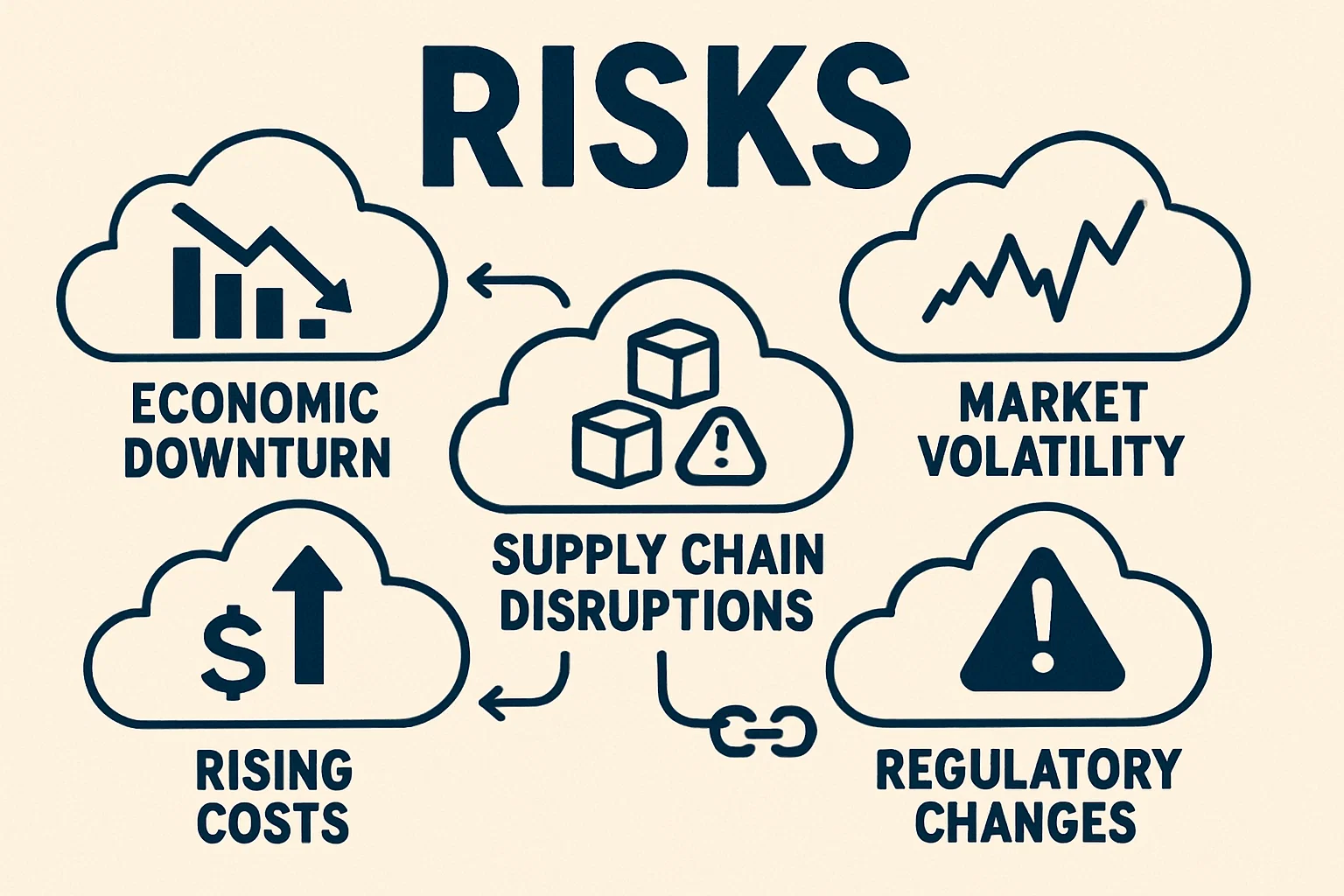
Even in a strong market, blockchain-tied equities carry distinct risks. Regulatory shifts can alter business models overnight. Network dynamics—hash rate, difficulty, fees—swing miner margins quarter to quarter. Energy markets and weather patterns affect uptime and power prices. For exchange-linked names, a lull in volatility can compress volumes just as quickly as the recent surge boosted them. And broader tech risk—if AI capex or market sentiment stumbles—can spill over into high-beta growth cohorts, including crypto.
How to build exposure thoughtfully
A balanced approach mixes factor betas. For instance, pairing a miner with a volume-sensitive exchange, and perhaps a “treasury proxy” like MSTR, can diversify beta sources: price level, volumes/volatility, and balance-sheet coin value. Adding an infrastructure name (CME) can complement the set with a different earnings driver—derivatives activity—tied to the same underlying trend of institutional adoption and on-chain finance. Always size positions assuming drawdowns of 40–70% can occur within the cycle. Blockchain Stocks To Consider.
See More: Best Blockchain Stocks to Invest in 2025 Top 15 Picks for Maximum Returns
Conclusion
The story on October 13 is simple: macro liquidity is back in digital assets. ETF rails are drawing record cash, and regulated venues like CME and Coinbase are natural beneficiaries. On the operating side, miners that survived the halving doubled down on efficiency and power. Strategies are positioned to harvest elevated BTC prices—while also exploring HPC adjacency to dampen cyclicality. Meanwhile, a corporate-treasury proxy like MSTR provides torque to price, and fintech rails like Block can use product breadth to convert crypto engagement into durable gross profit.
Still, the dispersion between winners and losers will remain wide. Use monthly production updates, investor letters, and derivatives data to keep the thesis tethered to numbers rather than narratives. In other words, let the blockchain story breathe—but make the stock case prove itself. Blockchain Stocks To Consider.
FAQs
Q: Are “blockchain stocks” just a proxy for Bitcoin?
Not entirely. Some names—like Strategy/MicroStrategy—are explicit BTC proxies. Miners mix BTC sensitivity with cost, power, and fleet efficiency. Exchanges like Coinbase add exposure to volumes and volatility, while CME adds exposure to regulated derivatives activity. Fintech rails like Block reflect product engagement and ecosystem growth.
Q: What changed for miners after the 2024 halving?
Block rewards were cut in half, compressing revenue per unit of hashrate. Survivors tend to be the lowest-cost operators with efficient ASIC fleets and strong power contracts. That’s why monthly production and cost updates from Riot, Marathon, CleanSpark, and others are so closely watched.
Q: Why do ETF flows matter for these stocks?
Heavy inflows to spot Bitcoin ETFs tighten spreads, deepen liquidity, and can lift volumes for exchanges and futures venues. In turn, that can boost revenue for Coinbase and CME. While higher spot prices and liquidity often improve miners’ cash generation.
Q: What’s the biggest risk to the theme right now?
Regulatory uncertainty and macro shocks always loom. Additionally, if broader tech sentiment sours—particularly around AI capex—high-beta growth names often re-rate lower. Which can spill into crypto-linked equities regardless of fundamentals. For miners, energy costs and network difficulty remain ever-present risks.
Q: Which single metric should I watch first each month?
For miners, check monthly BTC production, hashrate, and cost disclosures; for Coinbase, watch volumes/volatility and custody developments at CME. Track Bitcoin futures and options volume/open interest; for MSTR, track BTC price versus its average purchase price. These data points are the fastest reality checks on each thesis.
