


If 2017 was the year blockchain entered mainstream headlines and 2021 was the year it met scale pressures, then 2025 is the year it proved durable value. The question on every executive’s mind—what industries have benefitted from blockchain in 2025—now has concrete answers that go far beyond speculative trading. Across finance, healthcare, supply chains, energy, media, real estate, and the public sector.
Blockchain has moved from proof-of-concept to production-grade infrastructure. The technology’s core promise—tamper-resistant distributed ledger records that enable trust-minimized collaboration—has unlocked measurable gains: faster settlement times, lower reconciliation costs, richer data provenance, and new business models built on tokenization and smart contracts.
Why 2025 Marked a Turning Point
In previous cycles, blockchain innovation often stalled at the edge of enterprise adoption due to scalability bottlenecks, unclear regulation, and fragmented standards. In 2025, several shifts converged. Layer-2 scaling made high-throughput, low-fee transactions normal; interoperability frameworks linked previously isolated networks; and zero-knowledge proofs.
Improved privacy without sacrificing verifiability. Regulators clarified rules around tokenized assets, custody, and KYC/AML compliance. Most importantly, business leaders stopped evaluating blockchain as a silver bullet and started using it as a thin but powerful trust layer inside broader digital transformations. The result: production systems that deliver everyday value, not just headlines.
Finance and Banking: From Pilots to Profit Centers

Tokenized Assets and On-Chain Settlement
In capital markets, 2025 cemented tokenization as the fastest way to modernize legacy rails. Banks and fintechs now issue and manage tokenized bonds, fund shares, and real-world assets (RWA) on permissioned or hybrid chains. The advantage isn’t novelty; it’s efficiency. Smart contracts automate corporate actions, coupon payments, and redemptions. Settlement windows shrink from T+2 to near real-time, and reconciliation errors plummet because the single source of truth lives on-chain.
Custodians have adapted, offering institutional-grade wallets and automated compliance. Meanwhile, interoperability bridges allow assets to move between networks without forced liquidity fragmentation. The upshot: better market liquidity, lower operational cost, and improved transparency for auditors and regulators.
Payments, Remittances, and Treasury
Cross-border payments remain one of the most obvious wins. In 2025, businesses pay suppliers and freelancers in minutes rather than days using stablecoin corridors, while on-chain FX provides programmatic conversion at transparent rates. Corporate treasurers use automated liquidity sweeps controlled by smart contracts to optimize working capital 24/7. For consumers, remittances routed via stablecoins on layer-2 networks cost cents instead of percentage points, with settlement finality that rivals—or beats—traditional systems.
Risk, Compliance, and Identity
The longstanding tension between privacy and oversight eased thanks to zero-knowledge KYC: institutions can verify counterparties and prove policy adherence without revealing unnecessary data. Decentralized identifiers (DIDs) support reusable, self-sovereign identity, reducing onboarding friction while strengthening compliance. For risk teams, on-chain analytics and oracles provide real-time market signals, enabling automated limit checks and pre-trade controls written into smart contracts.
Healthcare and Life Sciences: Data Integrity Meets Privacy
Patient Records and Consent
Blockchain is not a database replacement for clinical systems, but it is the perfect place to anchor data integrity and consent. Hospitals and clinics in 2025 anchor hashes of patient records on a distributed ledger, ensuring any alteration is detectable. Patients grant and revoke data access through smart contracts, creating a verifiable audit trail for compliance frameworks. Because the actual medical data stays encrypted off-chain, performance and privacy remain intact.
Clinical Trials and Supply Chain for Pharma
Clinical research has benefitted from shared registries that timestamp trial protocols and outcomes, reducing publication bias and strengthening trust. Supply chain traceability for pharmaceuticals—tracking ingredients, batches, cold-chain events, and chain-of-custody—has reduced counterfeits and spoilage. IoT oracles stream temperature and location data to the ledger, and automated recalls can be triggered if any parameter falls out of spec.
Billing, Claims, and Prior Authorization
Administrative waste has long plagued healthcare. In 2025, smart contracts encode payer-provider agreements, adjudicate claims, and release payments upon verified milestones. Zero-knowledge proofs confirm eligibility without oversharing patient data. The outcome is fewer disputes, faster reimbursements, and better cost predictability.
Supply Chain and Manufacturing: Radical Transparency Without Exposure
End-to-End Traceability
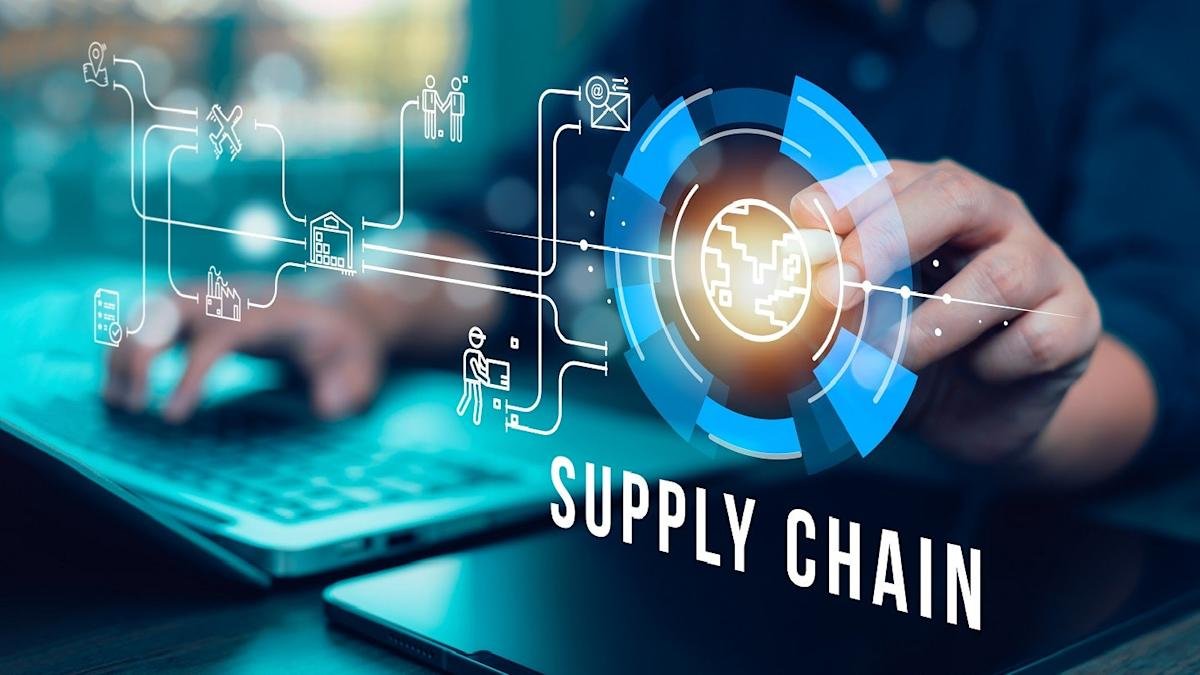
Manufacturers, retailers, and logistics providers have converged on blockchain as a neutral collaboration layer. Each handoff—from raw material to finished product—creates a signed event on the ledger, forming an immutable provenance graph. This makes sustainability reporting far more credible; companies can substantiate claims about recycled inputs, deforestation-free sourcing, or fair-labor certifications with verifiable evidence.
Quality Management and Recall Precision
When defects emerge, blockchain enables surgical recalls: companies identify impacted SKUs, lots, and retailers within minutes. Smart contracts codify service-level agreements so that when sensors report a humidity deviation or a temperature breach, automated workflows notify stakeholders, pause shipments, and trigger insurance claims. This data-driven accountability reduces waste and customer risk.
Trade Finance and Customs
With tokenized bills of lading and shared know-your-cargo registries, trade finance becomes safer and faster. Banks finance shipments using on-chain collateral that’s harder to forge, while customs authorities pre-clear goods based on verifiable documents. Interoperability ensures these artifacts travel with goods across carriers, ports, and jurisdictions.
Energy and Utilities: Measuring, Monetizing, and Balancing
Renewable Credits and Grid Services
The shift to decentralized energy markets has been turbocharged by blockchain. Tokenized renewable energy certificates (RECs) and carbon credits allow producers—from utility-scale solar farms to rooftop owners—to monetize generation instantly. Smart contracts automate issuance upon meter verification, and oracles bridge meter data to the chain. Because the ledger is transparent, double-counting and “greenwashing” are far harder.
Peer-to-Peer and Demand Response
Neighborhood microgrids and commercial campuses conduct peer-to-peer energy trades in real time, with dynamic pricing governed by smart contracts. When grid stress spikes, demand response contracts trigger automatic incentives for participating buildings to reduce consumption. The ledger provides a common, auditable record for utilities, regulators, and participants.
Infrastructure Finance
Large-scale energy projects package future cash flows into tokenized revenue shares, broadening the investor base and lowering the cost of capital. Secondary markets for these tokens improve liquidity, while automated cashflow waterfalls distribute proceeds with clockwork precision.
Media, Entertainment, and Gaming: Ownership That Travels
Rights, Royalties, and Fan Engagement
Artists and studios have long struggled with opaque royalty chains. In 2025, on-chain rights registries and smart contract royalty splits deliver transparent payouts across labels, publishers, and contributors. For fans, membership NFTs serve as portable passes unlocking exclusive content, early ticketing windows, and real-world perks. Unlike earlier hype cycles, these tokens are utility-first: they work because they smooth fan relationships and back-office accounting—not because they’re speculative chips.
Gaming Economies and Interoperability
Games increasingly rely on tokenized items and currencies that can move across titles within an ecosystem. Interoperability standards allow verified ownership while preventing exploits. Publishers retain control over game balance by limiting where and how items transfer, but players enjoy genuine asset rights, secure marketplaces, and improved anti-fraud protections.
See More: Enterprise Blockchain in 202:5 What’s Really Driving Adoption
Real Estate and Infrastructure: Frictionless Deals and Fractional Access
Tokenized Property Shares and Faster Closings
Property ownership is notoriously paperwork-heavy. Blockchain brings clarity to title records, escrows, and closing workflows. Tokenized equity in commercial properties opens fractional access for investors previously priced out of marquee deals. Smart contracts automate rent distributions and expense reserves. Underwriting becomes more data-driven as oracles feed property performance metrics, occupancy rates, and maintenance history to on-chain dashboards.
Mortgage Servicing and Secondary Markets
Servicers encode payment waterfalls and default triggers as smart contracts, ensuring that cash flows reach the right tranche investors on schedule. With more transparent performance data and standardized token formats, secondary markets for mortgage exposures become deeper and more competitive, potentially lowering borrower rates.
Government and Public Services: Trust, Speed, and Accountability
Procurement, Grants, and Aid
Public-sector procurement has historically been vulnerable to delays and opacity. With blockchain-based procurement, bids, scoring, and contract milestones are recorded on a distributed ledger. Smart contracts release funds when deliverables are verified, reducing fraud and improving vendor performance. In the humanitarian sphere, aid agencies distribute programmable vouchers to recipients, restrictable to approved merchants and goods, with transparent aggregate reporting that protects individual privacy using zero-knowledge proofs.
Identity, Licensing, and Records
Civic identity is the backbone of digital services. In 2025, several jurisdictions issue verifiable credentials—birth certificates, professional licenses, vehicle registrations—that citizens hold in secure wallets. When proving eligibility for housing, education, or employment, people present selective disclosures rather than full dossiers. Agencies can verify authenticity instantly, cutting processing times and reducing document fraud.
Insurance: Parametric Payouts and Verifiable Events
Insurance has embraced parametric contracts that pay claims based on objective events, not lengthy adjuster investigations. When rainfall exceeds a threshold or a flight is delayed, oracles post the event on-chain, and smart contracts trigger payouts automatically. For conventional policies, claims intake uses decentralized identity to reduce fraud, while shared loss histories on permissioned ledgers help carriers and reinsurers synchronize exposure data and reduce capital charges.
Education and Workforce: Skills That Travel With You
Universities and training platforms issue verifiable diplomas and skills badges that employers can confirm without calling registrars. This portability helps workers switch industries faster, while maintaining privacy through zero-knowledge proofs that attest to qualifications without revealing unrelated personal data. Scholarships and grants are disbursed via programmable funds, tied to course completion and attendance.
The Technical Enablers That Made It Work
Layer-2 and Modular Architectures
Layer-2 scaling solutions—rollups, validiums, and state channels—made blockchain usable at enterprise volume. Transaction costs fell dramatically, throughput rose, and user experience improved. Meanwhile, modular architectures separate execution, consensus, and data availability, letting builders match performance and security to the problem at hand.
Interoperability and Standards
Open standards for interoperability—from message formats to cross-chain verification—reduced vendor lock-in. Enterprises could choose the right network for each workflow while keeping assets and messages portable. Industry consortia codified data schemas, legal templates, and governance playbooks, making it easier to onboard new participants.
Privacy-Preserving Cryptography
Beyond zero-knowledge proofs, techniques like secure multi-party computation (MPC) enabled joint analytics on confidential datasets without exposing raw records. This is exactly the kind of tooling that convinced risk-averse sectors like healthcare and finance to move key processes on-chain.
Challenges That 2025 Solved—and What Remains
Blockchain didn’t magically erase complexity. Enterprises had to rework processes, retrain teams, and integrate with legacy systems. Governance mattered: who can write to the ledger, who can read sensitive fields, and how do you rotate keys when roles change? 2025 brought mature answers through policy-as-code, hardware security modules, and key management that’s safe for non-cryptographers. That said, work remains. UX can still be confusing. Cross-jurisdiction compliance keeps evolving. And while interoperability is vastly better, the industry will spend the next few years hardening bridges, standardizing proofs, and making network boundaries invisible to end users.
How to Decide If Blockchain Fits Your Use Case
The organizations that benefited in 2025 followed a consistent decision tree. First, they identified multi-party workflows with high reconciliation cost or trust gaps. Second, they asked whether a shared source of truth would reduce those costs.
Third, they mapped privacy and performance needs to the right architecture—public, permissioned, or hybrid; layer-2 or modular. Finally, they started small: one product line, one supplier network, or one asset class, with a clear KPI such as reduced days sales outstanding, lower dispute rates, or faster cycle times. This pragmatic, outcomes-first approach separated durable wins from flashy demos.
Case Patterns You Can Borrow
Shared Registry With Off-Chain Data
Many wins use a simple pattern: store cryptographic fingerprints on-chain while keeping bulk data off-chain. This protects privacy and performance while still delivering tamper-evidence and non-repudiation.
Event-Driven Smart Contracts
Instead of building monoliths, teams wire smart contracts to respond to business events—invoice approved, meter reading updated, shipment scanned. When the event occurs, the contract executes rules: releasing funds, updating ownership, or notifying subscribers.
Tokenization for Liquidity and Access
Wherever ownership is granular and cashflows are predictable, tokenization can broaden participation and create liquid secondary markets. Success hinges on sound legal wrappers, clean governance, and transparent valuation models.
Conclusion
So, what industries have benefited from blockchain in 2025? The honest answer is: the ones that treated blockchain as a quiet enabler rather than a spectacle. Finance reduced friction and widened access through tokenization and instant settlement. Healthcare protects patient privacy while improving data integrity. Supply chains achieved traceability at scale. Energy markets monetized renewables and orchestrated demand response. Media and gaming turned ownership into a portable, programmable feature. Real estate, government, insurance, and education modernized workflows and records with smart contracts, decentralized identity, and verifiable logs.
The pattern across these wins is consistent: pick a multi-party process, anchor trust in a distributed ledger, automate rules with smart contracts, and protect people with privacy-preserving cryptography. If you follow that path in 2025 and beyond, blockchain stops being a buzzword and becomes what it’s best at—an invisible trust fabric that lets the rest of your digital strategy shine.
FAQs
Q: Is blockchain still relevant after the hype cycles?
Yes. In 2025, blockchain is less about speculation and more about shared truth across organizational boundaries. Production systems handle settlement, supply chain traceability, identity, and compliance with measurable ROI.
Q: Do I need a public blockchain, a private one, or both?
It depends on your privacy and control needs. Many enterprises use hybrid architectures: a permissioned network for sensitive data and public chains for settlement, tokenization, or timestamping. Interoperability standards now make this feasible.
Q: How do we satisfy regulators when using blockchain?
Work with counsel early, encode policies in smart contracts, and use zero-knowledge proofs to demonstrate KYC/AML compliance without overexposing data. Choose networks with strong audit tooling and clear governance.
Q: What KPIs should we track to prove value?
Track cycle time (e.g., settlement moving from T+2 to near real-time), dispute rates, reconciliation costs, error rates, and working-capital improvements. For supply chains, measure recall precision and sustainability verifications; for energy, track REC issuance and payout latency.
Q: How do we start without overcommitting?
Identify one cross-company workflow with clear pain points. Prototype with a small partner group, use layer-2 scaling to keep fees low, and measure outcomes against a tight KPI. If it works, expand gradually, reusing your interoperability and identity foundations.
