

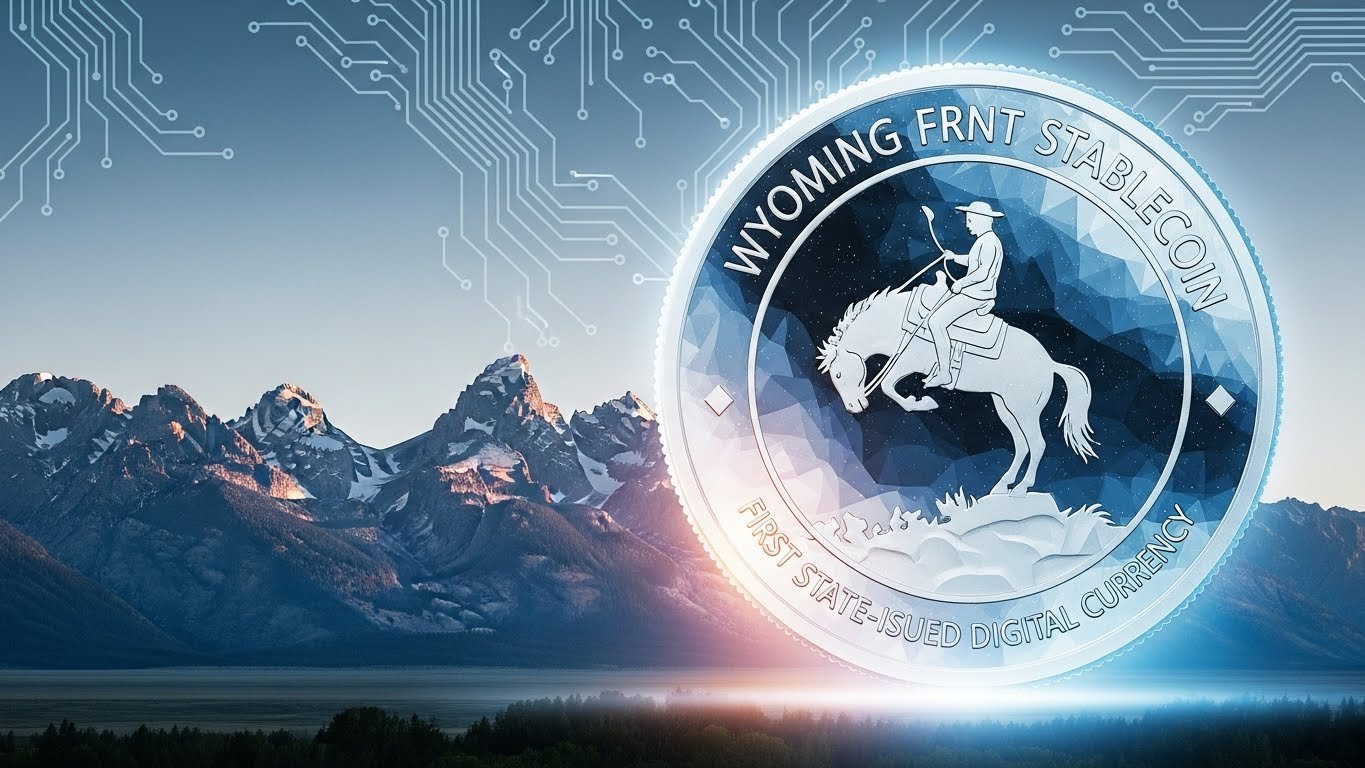
Wyoming FRNT stablecoin represents more than just another digital asset—it embodies a fundamental shift in how American states approach financial technology and monetary policy. As traditional financial systems continue merging with decentralized technologies, Wyoming’s bold move establishes a regulatory framework that other states are closely watching. This development comes at a critical time when federal cryptocurrency regulations remain uncertain, and states are exploring independent pathways to embrace digital innovation while protecting consumers.
Wyoming FRNT Stablecoin Initiative
Wyoming has cultivated a reputation as America’s most crypto-friendly state, passing over 30 blockchain-related laws since 2018. The FRNT stablecoin emerges from this progressive legislative environment as a natural evolution of the state’s commitment to digital asset innovation. Unlike privately issued stablecoins such as USDC or Tether, FRNT operates under direct state oversight, providing unprecedented transparency and regulatory compliance that addresses many concerns surrounding traditional stablecoins.
The Wyoming FRNT stablecoin functions as a dollar-pegged digital currency, maintaining a one-to-one value ratio with the US dollar. This design ensures price stability, eliminating the volatility typically associated with cryptocurrencies like Bitcoin or Ethereum. State officials developed FRNT to serve multiple purposes: facilitating efficient government payments, enabling faster business transactions, and providing Wyoming residents with a reliable digital payment alternative backed by state guarantees.
What distinguishes this state-issued stablecoin from private alternatives is its governance structure. Wyoming established the Wyoming Stable Token Commission, a specialized regulatory body responsible for overseeing FRNT’s operations, ensuring reserve adequacy, and maintaining compliance with both state and federal financial regulations. This institutional framework provides users with confidence that their digital dollars are fully backed by tangible assets held in regulated financial institutions.
How the FRNT Stablecoin Works
The technical architecture behind the Wyoming FRNT stablecoin combines blockchain technology with traditional banking infrastructure. FRNT operates on a permissioned blockchain network, meaning that while transactions are transparent and verifiable, only approved validators can process transactions. This hybrid approach balances the benefits of blockchain technology—transparency, efficiency, and programmability—with the security requirements of government-issued currency.
Every FRNT token in circulation is backed by reserves held in qualified custodial institutions. These reserves consist primarily of US Treasury securities and cash equivalents, ensuring that token holders can redeem their digital dollars for physical currency at any time. The Wyoming Stable Token Commission publishes monthly attestation reports detailing reserve holdings, providing unprecedented transparency compared to many privately issued stablecoins that have faced scrutiny over reserve adequacy.
Users can acquire FRNT stablecoins through licensed exchange providers operating within Wyoming’s regulatory framework. The onboarding process includes standard Know Your Customer (KYC) and Anti-Money Laundering (AML) procedures, ensuring compliance with federal financial regulations while preventing illicit activities. Once acquired, FRNT tokens can be transferred instantly between users, used for merchant payments, or held as a stable store of value.
The state-issued digital currency also features smart contract functionality, enabling automated payments, conditional transfers, and programmable money applications. Government agencies in Wyoming are already exploring use cases such as automated tax refunds, instant benefit distributions, and streamlined vendor payments. These applications demonstrate how blockchain-based government currencies can reduce administrative costs while improving service delivery to citizens.
Wyoming’s Crypto-Friendly Legislative Environment
Wyoming’s journey toward launching the FRNT stablecoin began years before the token’s actual debut. The state legislature recognized early that blockchain technology would fundamentally transform financial services, and proactive regulation could position Wyoming as a hub for digital innovation. In 2019, Wyoming passed groundbreaking legislation creating special purpose depository institutions (SPDIs), allowing banks to serve blockchain companies while operating under state charter.
This legislative foundation continued expanding with laws recognizing digital assets as property, establishing clear custody standards for digital securities, and creating regulatory sandboxes for fintech experimentation. The Wyoming Blockchain Task Force, established in 2018, brought together legislators, industry experts, and academics to craft sensible regulations that encourage innovation without compromising consumer protection.
The Wyoming stablecoin initiative received formal authorization through Senate File 106, which passed with bipartisan support in 2022. This legislation established the legal framework for state-issued stablecoins, defined reserve requirements, created the oversight commission, and outlined the token’s permissible uses. The law specifically prohibits FRNT from competing with private financial services while enabling government efficiency improvements and providing citizens with voluntary access to state-backed digital currency.
Governor Mark Gordon championed the initiative, emphasizing that Wyoming’s approach demonstrates how states can innovate responsibly within constitutional boundaries. Unlike federal Central Bank Digital Currency (CBDC) proposals that raise privacy concerns, the Wyoming FRNT stablecoin operates transparently within established legal frameworks, respecting individual financial privacy while meeting regulatory compliance standards.
Implications for State-Level Financial Innovation
The launch of the Wyoming FRNT stablecoin has profound implications extending far beyond cryptocurrency enthusiasts. This initiative demonstrates that state governments can develop sophisticated financial technology solutions independently of federal action. As Washington debates comprehensive crypto regulation, Wyoming proves that individual states possess the capability and authority to craft localized digital currency systems serving their residents’ needs.
Other states are watching Wyoming’s experiment closely. Texas, Florida, and Tennessee have all expressed interest in blockchain-friendly legislation, and some are exploring their own digital currency initiatives. The success or failure of the FRNT stablecoin will significantly influence whether additional states pursue similar projects or wait for federal guidance. Financial analysts suggest that a functional state-issued stablecoin could pressure federal regulators to clarify the regulatory landscape for digital assets, potentially accelerating nationwide crypto adoption.
Traditional financial institutions are also paying attention. Banks operating in Wyoming must now consider how they’ll integrate with the state-issued stablecoin ecosystem. Some view FRNT as potential competition, while others recognize opportunities for providing custody services, exchange functionality, and integration with existing payment infrastructure. The Wyoming Banking Commission has encouraged collaboration, emphasizing that FRNT complements rather than replaces traditional banking services.
The Wyoming digital currency initiative also raises important questions about monetary policy and state sovereignty. While FRNT maintains dollar parity and doesn’t create independent monetary policy, it establishes infrastructure that could theoretically support more ambitious financial innovations. Constitutional scholars debate whether states have authority to issue currency, though Wyoming carefully designed FRNT to function as a payment mechanism rather than legal tender, sidestepping potential constitutional conflicts.
Comparing FRNT to Other Stablecoin Projects
To understand the significance of the Wyoming FRNT stablecoin, comparing it to existing stablecoin projects provides valuable context. Tether (USDT), the largest stablecoin by market capitalization, has faced repeated questions about reserve transparency and regulatory compliance. Circle’s USDC offers greater transparency but operates as a private corporation without government oversight. Both these stablecoins serve primarily crypto traders seeking temporary stability while moving between volatile cryptocurrencies.
The FRNT stablecoin differs fundamentally in its governance model and intended use cases. Rather than serving speculative traders, FRNT targets practical applications: government payments, business transactions, and everyday purchases. The state oversight model provides accountability mechanisms absent from private stablecoins, with regular audits, public reserve disclosures, and democratic accountability through elected officials overseeing the Stable Token Commission.
Federal Reserve discussions about a central bank digital currency (CBDC) provide another comparison point. A US CBDC would offer direct central bank liability and potentially enable monetary policy innovations, but it also raises significant privacy concerns and questions about government surveillance. The Wyoming stablecoin occupies a middle ground—offering government backing and regulatory oversight while maintaining blockchain transparency and avoiding the surveillance potential of a federally controlled digital dollar.
International examples also inform Wyoming’s approach. China’s digital yuan demonstrates how governments can deploy CBDCs, though its design prioritizes central control over user privacy. The European Central Bank’s digital euro project emphasizes privacy protections while exploring programmable money features. Wyoming’s model learns from these international experiments while adapting to American federalism, creating a uniquely state-level approach to government digital currency.
Technical Security and Risk Management
Security represents a paramount concern for any government-issued financial instrument, and the Wyoming FRNT stablecoin incorporates multiple layers of protection. The permissioned blockchain architecture limits validator access to vetted entities subject to state oversight, reducing attack vectors compared to public blockchains. Regular security audits by independent cybersecurity firms examine both the blockchain infrastructure and smart contract code for vulnerabilities.
The reserve management framework provides additional risk mitigation. Wyoming law requires FRNT reserves to be held exclusively in low-risk assets: US Treasury securities, insured bank deposits, and overnight repurchase agreements. This conservative approach prioritizes capital preservation over yield generation, ensuring that market volatility doesn’t threaten the stablecoin’s dollar parity. Monthly attestation reports from independent accounting firms verify reserve adequacy, providing transparency that many private stablecoins lack.
Operational risks receive attention through redundant systems and disaster recovery planning. The state-issued stablecoin operates across geographically distributed nodes, ensuring that localized technical failures don’t disrupt the network. Backup validation systems stand ready to activate if primary validators experience outages. The Wyoming Stable Token Commission maintains comprehensive incident response protocols, enabling rapid reaction to technical issues or security threats.
Regulatory compliance represents both a security feature and an operational requirement. The Wyoming FRNT stablecoin adheres to Bank Secrecy Act requirements, implements transaction monitoring for suspicious activity, and maintains customer due diligence standards. These compliance measures protect the system from money laundering, terrorist financing, and other illicit uses while ensuring that FRNT can interoperate with traditional financial institutions subject to the same regulations.
Economic Impact on Wyoming’s Business Ecosystem
The introduction of the FRNT stablecoin creates new economic opportunities for Wyoming businesses. Companies can now receive payments instantly without waiting for bank transfers or credit card settlement periods. The elimination of intermediary fees—credit card processors typically charge 2-3% per transaction—provides cost savings that particularly benefit small businesses operating on thin margins. Early adopter merchants report transaction cost reductions of up to 80% when accepting FRNT payments compared to traditional card networks.
Wyoming’s energy sector, particularly wind farms and natural gas operations, represents a significant potential use case for the Wyoming stablecoin. Energy companies can use FRNT for rapid B2B settlements, paying suppliers instantly rather than waiting weeks for invoice processing. The transparency of blockchain transactions also simplifies accounting and regulatory reporting, reducing administrative overhead. Some energy companies are exploring smart contracts that automatically release payment when electricity delivery reaches agreed thresholds, eliminating disputes and accelerating cash flow.
Tourism businesses, another economic pillar for Wyoming, are beginning to accept FRNT payments from visitors. Hotels, restaurants, and outdoor recreation companies appreciate the elimination of foreign exchange complications for international tourists. A visitor from Europe can exchange euros for FRNT through licensed providers and spend seamlessly throughout Wyoming without worrying about credit card foreign transaction fees or currency conversion spreads.
The real estate sector is also examining applications for the state-issued digital currency. Property transactions typically involve multiple intermediaries, each adding costs and delays. Smart contracts using FRNT could automate title transfers, escrow management, and payment distribution, potentially closing real estate transactions in hours rather than weeks. While Wyoming is proceeding cautiously with real estate applications given the legal complexities, pilot programs are underway for commercial property transfers.
Regulatory Challenges and Federal Considerations
Despite Wyoming’s careful legal framework, the Wyoming FRNT stablecoin operates in a complex regulatory environment where state and federal jurisdictions intersect. The US Constitution grants Congress power to coin money and regulate interstate commerce, raising questions about state authority to issue digital currencies. Wyoming’s legal team crafted FRNT to function as a payment mechanism rather than independent currency, arguing that it falls within state authority over contract law and property rights.
Federal banking regulators maintain oversight of financial institutions holding FRNT reserves, creating layers of accountability beyond state supervision. The Office of the Comptroller of the Currency (OCC), Federal Deposit Insurance Corporation (FDIC), and Federal Reserve all play roles in supervising entities involved in the stablecoin ecosystem. Wyoming officials maintain ongoing dialogue with federal regulators, seeking to ensure that FRNT operations comply with applicable federal requirements while preserving state innovation authority.
Securities law presents another consideration. The Securities and Exchange Commission (SEC) has taken an expansive view of what constitutes a security in the crypto space, applying the Howey test to various digital assets. Wyoming designed the FRNT stablecoin to avoid securities classification by ensuring it doesn’t offer investment returns, maintains stable dollar parity, and functions purely as a payment medium. However, evolving SEC interpretations could create regulatory uncertainty requiring ongoing legal analysis.
Money transmission regulations add complexity, as most states require licenses for businesses transmitting money on behalf of others. Wyoming’s legislation addresses this by creating a specialized licensing regime for FRNT service providers, but these licenses may not automatically grant authority to operate across state lines. The Wyoming stablecoin currently functions primarily within state borders, though officials are exploring interstate compacts that could enable broader usage while maintaining regulatory compliance.
Privacy Protections and User Rights
Privacy represents a delicate balance in the Wyoming FRNT stablecoin design. Unlike cash, which offers complete anonymity, blockchain transactions create permanent records. However, unlike a hypothetical federal CBDC that could enable comprehensive government surveillance of all transactions, FRNT incorporates privacy protections limiting government access to user data except in cases where legal warrants or subpoenas demonstrate probable cause of criminal activity.
Transaction data on the FRNT blockchain includes wallet addresses but not personal identity information. Service providers maintain KYC records linking identities to wallets, but these records remain private unless law enforcement obtains proper legal authorization. This architecture prevents casual surveillance while enabling legitimate investigations of criminal activity. The Wyoming Stable Token Commission cannot access user transaction histories without following established legal procedures.
Users maintain control over their FRNT holdings through self-custody options. While many users may prefer custodial wallets operated by licensed providers—offering recovery mechanisms if passwords are lost—technically sophisticated users can hold FRNT in self-hosted wallets, maintaining direct control over their private keys. This flexibility respects user preferences for either convenience or maximum control over their digital assets.
The state-issued stablecoin also implements transaction privacy features that prevent casual observers from tracking individual spending patterns. While validators can verify transaction validity, they cannot link transactions to specific individuals without cooperation from service providers holding KYC information. This pseudonymous model balances legitimate privacy interests against the need to prevent money laundering and other financial crimes.
Future Development and Expansion Plans
The initial launch of the Wyoming FRNT stablecoin represents just the beginning of Wyoming’s digital currency ambitions. State officials have outlined a phased approach to expanding FRNT’s functionality and adoption. Phase one focuses on government payments and early adopter merchants, establishing operational reliability and building user confidence. Phase two will introduce additional features including programmable money capabilities, integration with traditional banking services, and expanded merchant acceptance.
International remittances represent a significant opportunity for FRNT expansion. Wyoming has substantial immigrant populations sending money to family members abroad. Traditional remittance services charge fees ranging from 5-10% and take several days for delivery. The Wyoming stablecoin could enable near-instant international transfers at a fraction of current costs, providing meaningful benefits to working families. Wyoming officials are discussing partnerships with foreign financial institutions to establish redemption networks in common remittance destination countries.
The agricultural sector, vital to Wyoming’s economy but underserved by traditional fintech, represents another expansion target. Ranchers and farmers often operate in remote areas with limited banking access and face seasonal cash flow challenges. The FRNT stablecoin could enable mobile banking access for rural populations, facilitate rapid equipment purchases during critical planting seasons, and streamline agricultural commodity transactions. Smart contracts could automate crop insurance payouts based on weather data, eliminating lengthy claims processes.
Wyoming envisions the state-issued stablecoin eventually interoperating with digital currencies from other states, creating a network of interoperable government-backed digital dollars. This vision requires technical standards and regulatory coordination, but it could enable seamless interstate commerce using digital currencies while preserving state-level regulatory authority. The Wyoming Stable Token Commission is engaging with counterparts in other states interested in similar initiatives, working toward common technical standards and regulatory frameworks.
Educational Initiatives and Public Adoption
Successful adoption of the Wyoming FRNT stablecoin requires public understanding and trust. Wyoming has launched comprehensive educational initiatives explaining how FRNT works, addressing common concerns, and demonstrating practical applications. The state partnered with community colleges and the University of Wyoming to develop blockchain literacy programs, ensuring residents understand the technology underpinning their state’s digital currency.
Public workshops held throughout Wyoming provide hands-on experience with FRNT wallets and transactions. Attendees receive small amounts of FRNT to experiment with, learning how to send payments, verify transactions, and secure their digital assets. These workshops particularly target populations that might benefit most from digital currency access—including rural residents, small business owners, and underbanked populations lacking traditional banking relationships.
The state government is leading by example, gradually transitioning certain payment types to FRNT-based systems. Tax refunds, vendor payments, and eventually benefit distributions will offer recipients the option to receive payment in FRNT rather than traditional direct deposit or checks. This practical exposure helps normalize digital currency usage while demonstrating the efficiency benefits of blockchain-based payments.
Media campaigns address common misconceptions about the Wyoming stablecoin, particularly distinguishing it from volatile cryptocurrencies like Bitcoin. Educational materials emphasize FRNT’s dollar parity, state backing, and regulatory oversight—characteristics that make it fundamentally different from speculative digital assets. The campaigns also highlight privacy protections, security features, and the voluntary nature of FRNT adoption, ensuring residents understand they retain complete freedom to use traditional payment methods.
Environmental Considerations and Sustainability
Environmental impact represents an important consideration for any blockchain initiative. The Wyoming FRNT stablecoin addresses sustainability concerns through its technical architecture. Unlike Bitcoin, which relies on energy-intensive proof-of-work mining, FRNT operates on a permissioned blockchain using a proof-of-authority consensus mechanism. This approach requires only a small number of validators operating standard server hardware, dramatically reducing energy consumption compared to public blockchains.
Wyoming’s abundant renewable energy resources—particularly wind power—provide clean electricity for FRNT network infrastructure. The state has committed to powering all government-operated blockchain nodes with renewable energy, demonstrating that digital currencies can operate sustainably. This environmental approach aligns with Wyoming’s diverse economic interests, balancing traditional energy production with growing renewable energy development.
The state-issued stablecoin also offers environmental benefits by reducing physical resource consumption. Traditional banking infrastructure requires extensive building networks, ATM machines, currency printing, and physical security—all consuming materials and energy. Digital currencies reduce these physical requirements, enabling financial services with smaller environmental footprints. The elimination of paper checks alone prevents significant waste, as Americans still write billions of checks annually.
Wyoming officials emphasize that the FRNT stablecoin demonstrates sustainable blockchain applications, countering narratives that all cryptocurrency projects harm the environment. By showcasing energy-efficient consensus mechanisms and renewable power integration, Wyoming hopes to encourage other blockchain projects toward sustainability while proving that environmental responsibility and technological innovation can advance together.
Conclusion: Wyoming FRNT Stablecoin Shapes Digital Finance Future
The launch of the Wyoming FRNT stablecoin represents a watershed moment in American financial innovation, demonstrating that state governments can successfully develop and deploy sophisticated digital currency systems. This pioneering initiative combines blockchain technology’s efficiency benefits with government oversight’s accountability and transparency, creating a model that balances innovation with consumer protection. As Wyoming residents and businesses begin integrating FRNT into daily transactions, they participate in an experiment that could fundamentally reshape how Americans interact with money.
The success of the Wyoming stablecoin will depend on continued technical reliability, sustained political support, and growing public adoption. Early indicators suggest positive momentum, with merchants appreciating reduced transaction costs and residents enjoying payment convenience. However, challenges remain—including federal regulatory uncertainty, competition from private payment systems, and the need for ongoing technological development to keep pace with evolving user expectations.
Other states contemplating similar initiatives should watch Wyoming’s experience carefully. The lessons learned from FRNT’s deployment—both successes and setbacks—will inform future state-level digital currency projects across America. Whether Wyoming’s model becomes the standard for state-issued stablecoins or serves as one experiment among many approaches, it has already achieved significance by proving that states can innovate boldly in digital finance while respecting constitutional boundaries and protecting citizen interests.
As digital currencies continue transforming global finance, the Wyoming FRNT stablecoin stands as an American answer to this technological revolution—one that preserves federalism, respects individual rights, and demonstrates that government can adapt to technological change without sacrificing the principles underlying democratic governance. Wyoming invites residents, businesses, and observers nationwide to follow this groundbreaking initiative as it unfolds, shaping the future of state-level financial innovation and establishing precedents that may influence American monetary policy for generations to come.
See more: Garanti BBVA Kripto Selects Wyden for Digital Asset Trading Services
